Water Heater Repair in Denver, CO
When the shower runs cold or the tank starts leaking, the question is what actually failed. We test the unit, find the fault, and tell you plainly whether a repair will hold or a replacement is the honest call.
Service overview
Diagnosis first, then the repair that fits the fault
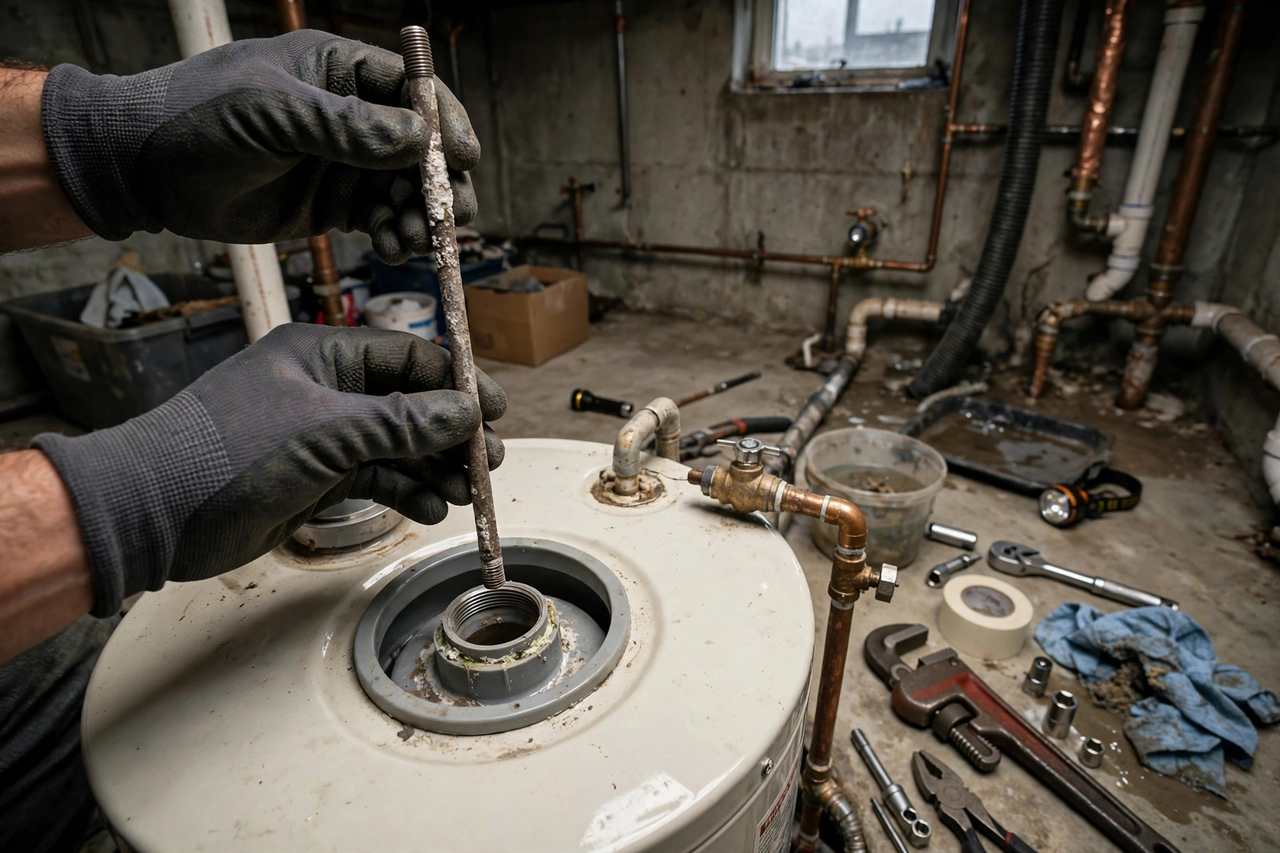
Water heater repair in Denver is the diagnosis and fix of a tank that has stopped heating, started leaking, or begun making noises it did not make before. We check the thermostat, heating element, gas control, thermocouple, relief valve, and anode rod, and we trace leaks to their source instead of guessing at them. Denver Water reports hardness of about 89–105 mg/L (5.2–6.1 gpg), and that mineral load leaves scale on elements and burner surfaces, so tanks here work harder and wear sooner than they would on softer water. A cold snap drops inlet temperatures, which makes a struggling unit show its age. Most of the tanks we see sit in basements, where a slow leak can go unnoticed until it reaches finished flooring, so we take pooling water seriously even when the unit still heats.
! Common warning signs
No hot water at any fixture
A dead element, a failed thermocouple, a tripped breaker, or a gas control that will not stay lit leaves the whole house cold. We test each part in turn so the fix matches the fault.
Water pooling around the base
A leaking relief valve, drain valve, or fitting is usually repairable. A leak from the tank body itself means the steel has rusted through, and that tank is not a repair candidate.
Popping, rumbling, or rusty water
Popping usually means sediment has built up on the bottom of the tank and the burner is heating through it. Rusty hot water points to a spent anode rod and corrosion working from the inside out.
Scope of work
What a water heater repair visit covers
A water heater repair starts with the symptom: no hot water, a leak or a pilot that will not stay lit each point to a different part, and we test the unit to find which one failed. Here is what the visit covers.
-
01
Full diagnostic testing
We test the thermostat, heating element, thermocouple, gas control, and relief valve, check the anode rod, and look for corrosion at the fittings before anything is taken apart.
-
02
The repair itself
The failed component is replaced and the unit is run through a full heating cycle so we can confirm hot water is restored and the repair holds under normal use.
-
03
Gas and pressure checks
Any gas connection is leak-tested before we leave, and the relief valve is checked so the tank is not left running with a safety device that does not open.
-
04
Cleanup and walkthrough
We drain water into a bucket or hose, lay drop cloths, and take old parts with us. Before we go, we show you what failed and what to watch for on the unit going forward.
Repair or replace: how the call is made
A tank with one failed part and sound steel is usually worth repairing. A tank leaking from its body, or one facing a second major failure after years of scale buildup, is not. We lay out both options when the diagnosis points that way, and a replacement in Denver needs a permit and inspection, so we explain that step before any work is agreed.
Call (720) 599-7253Tools and methods we use
Element wrench
Removes and installs screw-in heating elements on electric tanks without damaging the tank threads or the element itself.
Multimeter
Tests thermostat, element, and thermocouple continuity so we replace the part that failed rather than the parts around it.
Leak tracing equipment
Helps us tell a fitting leak from a tank-body leak, which is the distinction that decides repair against replacement.
Pipe wrench and torch
Loosens stubborn fittings and makes sound copper joints on supply lines and relief valve connections.
Local execution
Denver water is hard, and that single fact drives much of the water heater repair work in this city. Scale builds on elements and burner plates, the tank works harder, and parts fail earlier than they would on softer water. Older homes in Baker, Globeville, and Elyria-Swansea often still have galvanized or older copper pipe feeding the heater, and restricted flow stresses tank fittings. Newer builds in Central Park and Green Valley Ranch run PEX, which is easier on the system but still needs correct sizing. We pull a Denver permit when the scope requires it, and every gas repair gets a leak test before we leave.
Where water heater repair comes up most in Denver
What to tell us when you call
No hot water? Call to book a repair visit
What to do while you wait
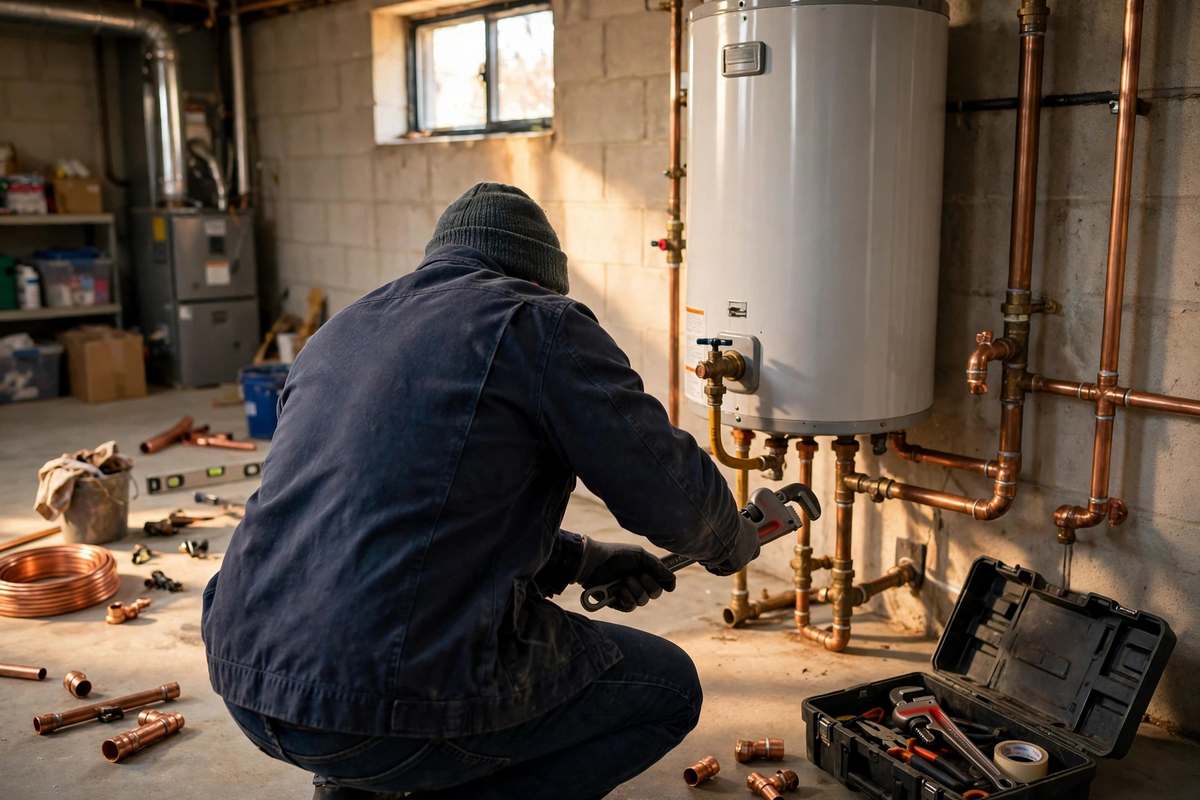
A water heater rarely fails at a convenient time. Call (720) 599-7253 and describe what the unit is doing, and we will confirm availability when you call. If water is pooling, shut off the cold-water supply valve above the tank and, for a gas unit, turn the gas control to off; for an electric unit, switch off the breaker. Do not drain the tank yourself if the water is still hot.
What to expect from your repair
Call and describe the symptoms
Call (720) 599-7253 and tell us what the unit is doing: no hot water, rusty water, popping, or a puddle. We ask for the fuel type and the age if you know it, then set a time that fits your day.
On-site diagnosis
We shut off the gas or power, drain a little water to inspect the tank, and test the thermostat, element, thermocouple, and relief valve. We show you what failed before any repair is agreed.
Repair or replace decision
If the fault is a component, we repair it and run the unit through a full heating cycle. If the tank itself has failed, we explain the replacement route, including the Denver permit and inspection it requires.
What shapes the cost of water heater repair in Denver
A water heater repair has no published price: what failed and the state of the unit set the scope. We talk through what the repair involves before any work starts, so you can decide with the facts in front of you.
Part and fuel type
A standard electric element and a gas control valve are different jobs with different parts, and tankless components are more specialized again. The failed part sets much of the scope.
Tank age and condition
A newer tank with one failed part is a straightforward repair. An older tank with corrosion, a spent anode rod, and a leaking fitting may not be worth repairing, and we will say so.
Access and permit needs
A heater in an open basement is simpler to work on than one packed into a closet. Work that needs a Denver permit and inspection adds steps to the job, and we factor that in.
Before any work starts
Frequently asked questions
Why is my water heater leaking in Denver?
Most leaks come from a failed relief valve, a loose drain valve, or a corroded fitting, and those are repairable. A leak from the tank body itself usually means the steel has rusted through and the unit needs replacement. Shut off the supply valve and the gas or breaker, then call us.
Should I repair or replace my water heater?
If the tank is under ten years old and the failure is a component, repair is usually the better call. If it is leaking from the tank body, or you are facing a second major repair, replacement makes more sense. We quote both options on the same visit so you can compare.
Does hard Denver water shorten a water heater's life?
Yes, in practice. Denver Water reports hardness of about 89–105 mg/L (5.2–6.1 gpg), and that mineral load leaves scale on elements and burner surfaces. Scale makes the unit work harder and parts fail earlier, which is why flushing and anode checks matter here.
Do I need a permit for a water heater repair in Denver?
A repair of a failed component generally does not need a permit. A replacement does: Denver requires a permit and inspection for water heater replacement, and an expansion tank on closed systems. We explain that step if the diagnosis points to replacement.
More on water heaters: Water heater repair or replacement: which is right for you, and the leak that usually starts the question, Why is my water heater leaking from the bottom.
Related services
Emergency Plumbing
A leaking tank can flood a basement, and a gas fault is not a wait-and-see problem. Our emergency plumbing page covers what to shut off and when to call.
Leak Detection
When water appears and the source is not obvious, we find it first — fitting, tank or the line behind it — and only then talk about the fix.
No hot water in Denver? Call us
Call (720) 599-7253 and tell us what your water heater is doing. We will confirm availability, diagnose the unit, and give you a straight repair-or-replace answer.