Faucet Repair in Denver, CO
A faucet that drips all night, a handle that will not turn, or a stream that has gone thin usually comes down to one worn part inside. We find it, replace it, and leave the faucet working the way it should.
Service overview
One worn part is usually the whole story
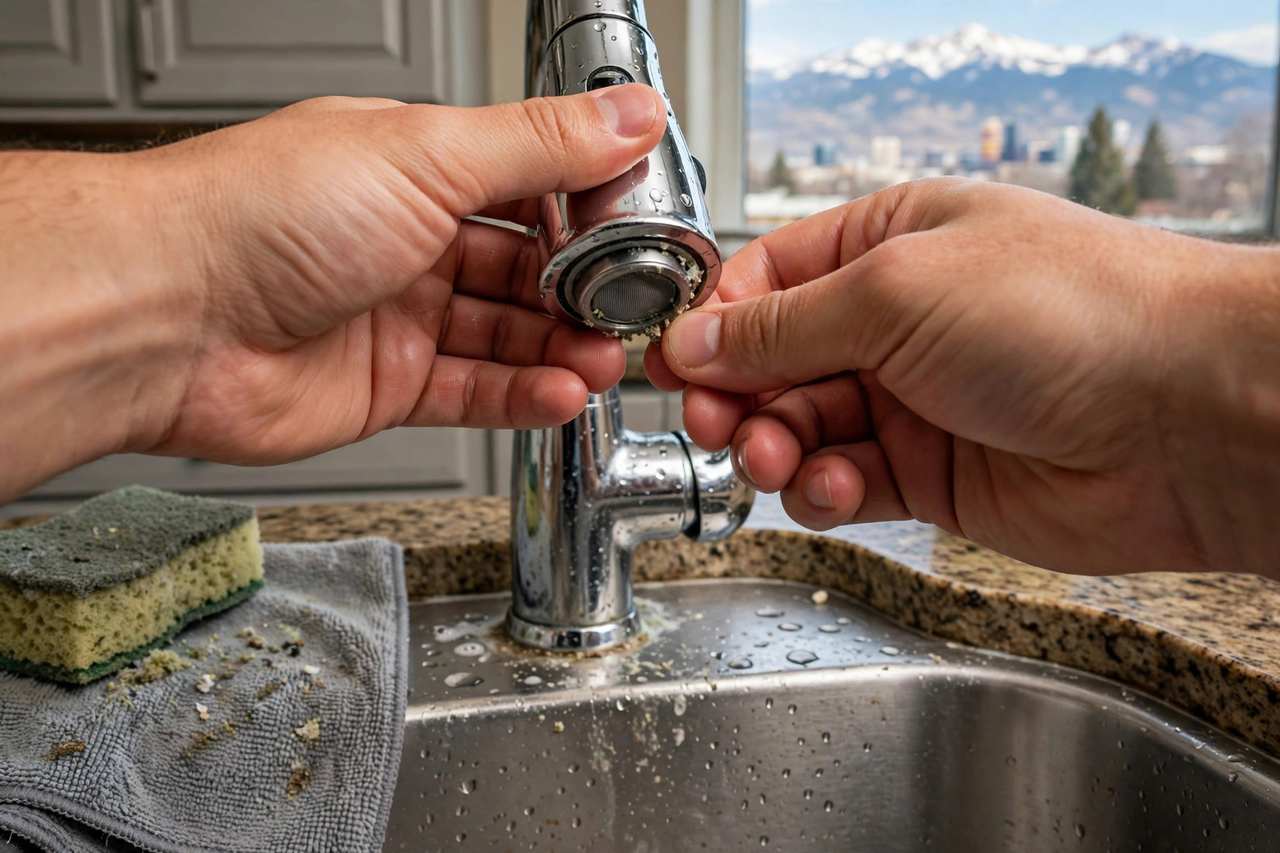
Faucet repair in Denver is the diagnosis and fix of a kitchen, bathroom, or utility faucet that drips, sticks, leaks at the base, or has lost flow. Most modern faucets use a cartridge to control water, and when that cartridge wears, the faucet drips or the handle gets stiff. Older two-handle faucets use washers and O-rings that harden and crack over time. Denver's soft to moderately hard water leaves mineral deposits on aerators and inside cartridges, so a faucet that has gone thin or gritty is often a scale problem as much as a wear problem. We identify the faucet type, find the failed part, and repair it rather than replacing a fixture that has years left in it.
! Problems we solve
A drip that will not stop
A faucet that drips after it is shut off is usually a worn cartridge or washer. It wastes water around the clock and stains the sink, and it will not fix itself.
A stiff or loose handle
A handle that is hard to turn, or one that wobbles and does not shut the water off fully, points to a worn cartridge or a loose retaining nut inside the body.
Low flow or a sputtering stream
Mineral scale in the aerator or the cartridge narrows the waterway. Flow drops, the stream sputters, and the faucet feels tired even when it is not leaking.
Scope of work
What a faucet repair visit covers
A faucet repair starts with the cartridge or washer inside the tap: we identify the faucet type, find the worn part, and replace it rather than swapping a fixture that still has years in it. Here is what the visit covers.
-
01
Identifying the faucet
We identify the faucet type and the cartridge or washer it uses, so the replacement part matches the fixture rather than forcing a generic fit.
-
02
Cartridge and seal replacement
The worn cartridge, O-ring, or washer is replaced, the valve seat is checked for pitting, and the aerator is cleaned of mineral deposits.
-
03
Leak checks at the base and supply
We check the base, the spout, and the supply connections under the sink, because a drip at the handle and a leak at the base are different faults.
-
04
Testing and adjustment
After the repair we run hot and cold through the faucet, check the shutoff is clean, and set the handle travel so the faucet works smoothly.
Repair or replace: how the call is made
A faucet with a worn cartridge or a scaled aerator is worth repairing, and most are. A faucet with a corroded body, a pitted valve seat that will not seal, or a finish that has failed is a different conversation, and we lay out the replacement option when the diagnosis points that way.
Call (720) 599-7253Tools and methods we use
Cartridge puller
It frees a seized cartridge without marking the faucet body, so the faucet can be repaired instead of replaced.
Basin wrench
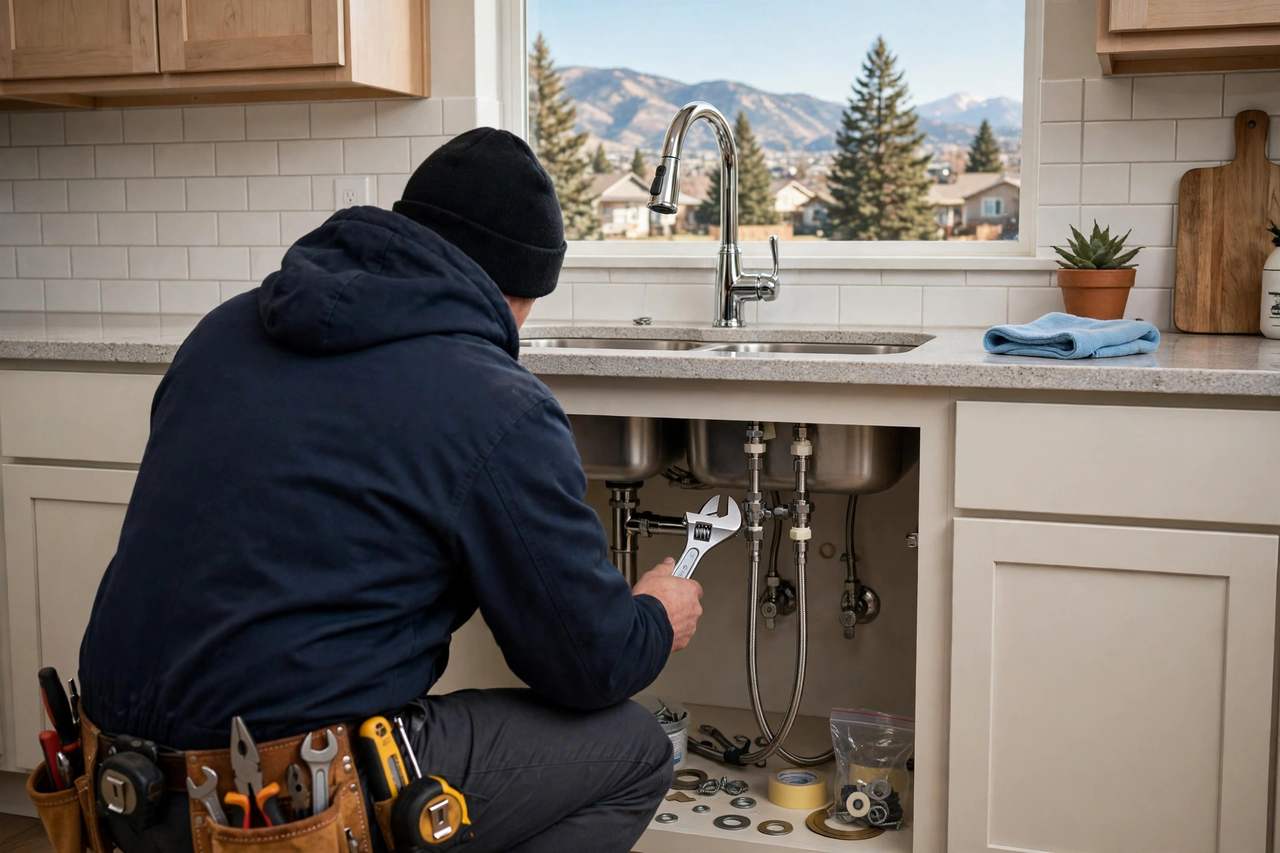
The retaining nuts under the sink are reached with a basin wrench, so the faucet is serviced without removing the sink.
Seat wrench and inspection light
Checks the valve seat for pitting and corrosion, which is the fault that decides whether a repair will hold.
Descaling and cleaning tools
Clears mineral deposits from aerators and cartridges so flow is restored without replacing parts that are still sound.
Local execution
Denver's older housing stock is where faucet repair comes up most. In Capitol Hill and Baker, pre-war homes still have two-handle faucets with washers that have hardened over decades, and the shutoff valves under those sinks are often original brass that has seized. In Congress Park and Park Hill, 1920s and 1930s bungalows mix original fixtures with later replacements, so identifying the cartridge takes care. Denver Water reports hardness of about 89–105 mg/L (5.2–6.1 gpg), and that mineral load is what clogs aerators and stiffens cartridges across the city.
Where faucet repair comes up most in Denver
What to tell us when you call
Dripping faucet? Call to book a repair visit
What to do while you wait
A dripping faucet wastes water around the clock, but it is not an emergency. Call (720) 599-7253, describe the faucet and the fault, and we will confirm availability when you call. If water is leaking at the base or under the sink, shut off the angle stops under the sink and place a bucket beneath the trap.
What to expect from your faucet repair
Call and describe the fault
Call (720) 599-7253 and tell us which faucet it is and what it does: drips, sticks, leaks at the base, or has lost flow. We set a time that fits your day.
On-site diagnosis
We identify the faucet type, test the cartridge and seals, and check the base and supply connections so the fault is found before any part is replaced.
Repair and testing
The worn part is replaced, the aerator is cleaned, and the faucet is run hot and cold to confirm the shutoff is clean and the flow is restored.
What shapes the cost of faucet repair in Denver
The price of a faucet repair depends on the faucet type and the part that failed, so no price is published on this site. Call and describe the fault, and we will talk through what decides the price before agreeing to anything.
Faucet type and part
The part sets much of the scope: a single-lever cartridge faucet and a two-handle washer faucet are different repairs, with different parts and different failure points.
Condition of the fixture
A faucet with a sound body and one worn part is a straightforward repair. A corroded body or a pitted valve seat may not be worth repairing.
Access under the sink
Under a kitchen or bathroom sink, the repair happens in a cabinet: a clear cabinet with working shutoffs lets us reach the cartridge and the connections directly, and a packed cabinet with seized valves slows the visit down.
Before any work starts
Frequently asked questions
Why does my faucet keep dripping after I shut it off?
Usually a worn cartridge or washer that no longer seals. In two-handle faucets the washer hardens and cracks; in single-lever faucets the cartridge wears. Replacing the failed part stops the drip.
Why has my faucet lost water pressure?
Often mineral scale in the aerator or the cartridge. Denver Water reports hardness of about 89–105 mg/L (5.2–6.1 gpg), and that mineral load narrows the waterway over time. Cleaning the aerator and checking the cartridge usually restores flow.
Can a stiff faucet handle be repaired?
Usually, yes. A stiff handle is often a worn or scaled cartridge, and replacing it restores smooth travel. If the faucet body itself is corroded, replacement is the better call.
Should I repair or replace my faucet?
A faucet with one worn part and a sound body is worth repairing. A faucet with a corroded body, a pitted valve seat, or a failed finish is not. We lay out both options when the diagnosis points that way.
More on faucets: How to replace a bathroom faucet, step by step.
Related services
Faucet Installation
If the fixture is past repair, the installation page covers selecting and fitting a new kitchen, bathroom, or utility faucet.
Leak Detection
If you cannot see where the water is coming from, the job starts with tracing: a meter test and a check of the fitting, the supply line and the fixture.
Faucet dripping in Denver? Call us
Call (720) 599-7253 and tell us which faucet it is and what it does. We will confirm availability and find the worn part.