Sewer line repair in Denver, diagnosed on camera first
When sewage backs up or a yard starts sinking over the sewer path, the first step is a camera, not a shovel. We inspect the line, show you the footage, and repair the failed section, whether that means a spot fix, a section replacement, or a trenchless repair. Call (720) 599-7253 to book.
Service overview
What sewer line repair in Denver really involves
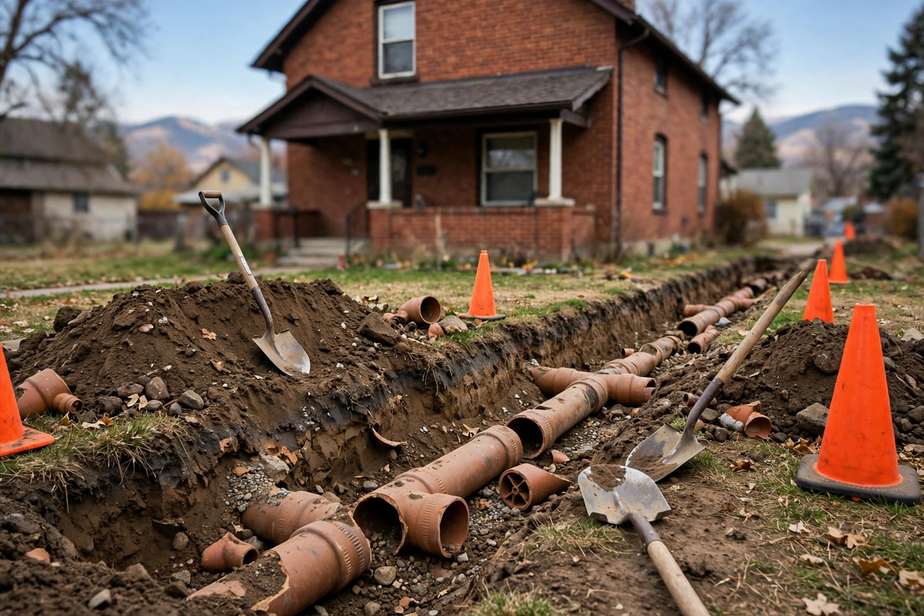
Sewer line repair in Denver is the work of finding and fixing the pipe that carries waste from your home to the city main. In Denver, the homeowner owns that private lateral from the house to the main, including the section under the street. Most failures in the city's older stock are the same three: root intrusion at clay joints, cracks and offsets in aging clay and cast iron, and bellies where the pipe has settled and holds waste.
! Common warning signs
Multiple drains backing up at once
When every drain in the house is slow or backing up, the main line is blocked. Waiting means sewage eventually backs into the lowest fixture, usually a basement floor drain.
Sewage smell in the yard or basement
That smell means waste is escaping the pipe before it reaches the city main. It can contaminate soil, and it usually points to a crack or a failed joint rather than a simple clog.
Soggy spots or sinkholes in the lawn
A sunken patch over the sewer line means the soil around the pipe has washed away. Left alone, the pipe can collapse completely, and the sinkhole can spread to a walkway or driveway.
Scope of work
What our sewer line repair service includes
Every sewer repair job is different, but the order of work is consistent: diagnose on camera, clear the line, repair the failure, and test the flow. Here is what that covers.
-
01
Camera inspection and report
We run a pipe camera through the cleanout and record the full line. You get a written report with the depth, pipe material, and location of the problem, and you watch the footage with us.
-
02
Blockage clearing
Before we repair anything, we clear the line with a drain snake or hydro jetting. Roots, grease, scale, and debris all come out. Clearing first means the camera sees the pipe, not the blockage.
-
03
Spot repair or section replacement
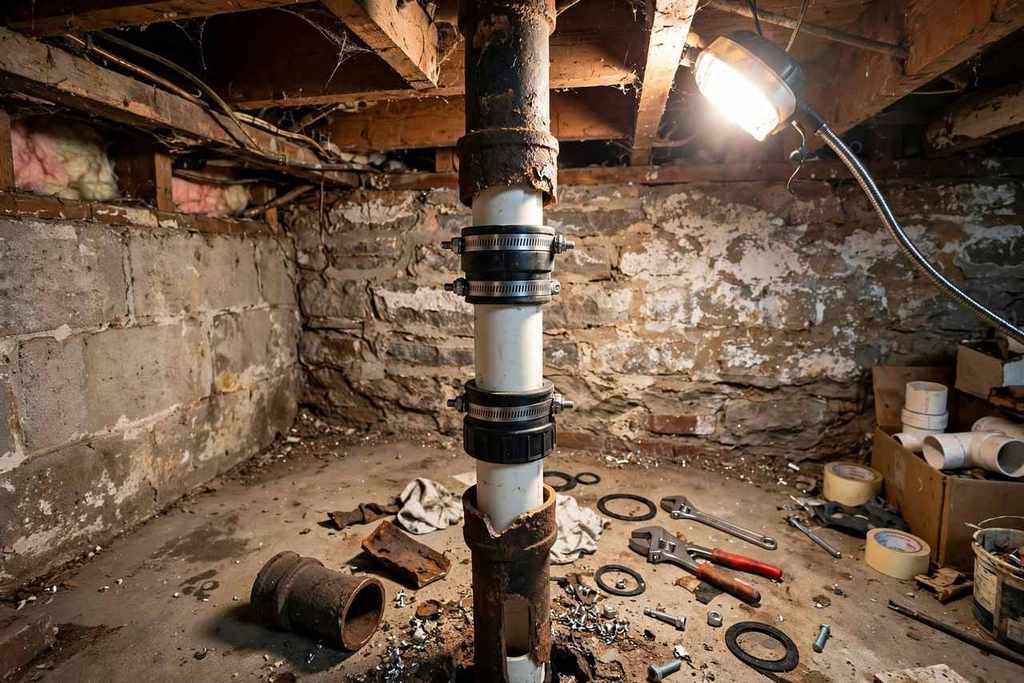
If the damage is localized, we cut out the bad section and replace it with new pipe and proper couplings. If the camera shows the line is failing in several places, we price a larger replacement and let you compare the two.
-
04
Flow test and cleanup
After the repair, we run water through the line, re-camera it, and check every fixture in the house. Then we backfill, compact the soil, and restore the surface.
Why homeowners call us for sewer repair
A backed-up sewer is not a wait-and-see problem. The longer a cracked lateral leaks, the more soil washes away around it, and the repair grows from a spot fix into a full replacement. A camera inspection is what keeps the job as small as the pipe allows, because it shows exactly where the failure is and how far it extends.
Book a sewer repair visitTools and methods we use for sewer repair
Pipe camera inspection
Feeds a camera through the sewer line to locate breaks, roots, and blockages. We can record the footage and show it to you on the monitor before any repair is quoted — ask when you book.
Hydro jetting machine
Uses water at high pressure to scour grease, scale, and roots off the pipe walls. It clears blockages that a drain snake cannot reach and leaves the line clean enough to camera properly.
Drain snake and auger
Cuts through roots and soft blockages in smaller lines. We use it for branch drains and for initial clearing before hydro jetting, and it handles most simple clogs without heavy equipment.
Leak detection equipment
Acoustic listening and thermal imaging tools that pinpoint hidden leaks in supply lines and under slabs. When water is pooling in the yard but the sewer camera is clear, the source is often a supply line, and this is how we separate the two.
Local execution
Denver's sewer lines sit in some of the most variable soil in the country. Along the South Platte corridor and in older neighborhoods such as Globeville and Elyria-Swansea, the stock is late-1800s worker cottages on clay laterals, and the ground itself is part of the story: expansive bentonite clay swells when it wets and shrinks when it dries, which shifts joints and opens cracks that roots find. In Park Hill, the laterals run longer under deep front yards, so a repair means more digging and more root exposure. In Harvey Park and Mar Lee, the mid-century clay laterals are reaching the end of their service life together. The city maintains more than 1,500 miles of sanitary sewer, and some of it is more than a century old, but the lateral from your house to the main is yours, and a Sewer Use and Drainage Permit is required before main-line work begins.
How sewer line repair runs in Denver
What sewer repair usually looks like
Sewage in the yard or the basement is not a wait-and-see problem
Call (720) 599-7253 to book a camera inspection
If sewage is backing up or you can smell it in the yard, the first step is a camera inspection, not another round of clearing. Clearing treats the blockage; the camera shows whether the pipe itself has failed. Call (720) 599-7253 to book, and we will confirm availability when you call. On the visit we run the camera, show you the footage, and quote the repair before any digging starts.
How our sewer line repair process works
Call and schedule
You call (720) 599-7253 and tell us what you are seeing: slow drains, gurgling toilets, sewage smell, or a wet spot in the yard. We ask where the cleanout is and whether the home has a basement, so we arrive with the right equipment.
Camera inspection
We feed a camera down the cleanout. You watch the monitor with us. We note the depth, the pipe material, and the location of the failure, and we can record the footage for a written report on request.
Clear, repair, test
We clear the blockage first, then repair the failed section. After the repair we re-camera the line and run water through every fixture to confirm the flow is restored.
What affects the cost of sewer line repair in Denver
Sewer work is not a place to cut corners, and the quote reflects the pipe, not the promise. We quote the repair before we start, and the factors below are what move the number.
Length and depth of the line
A short line at shallow depth is a much smaller job than a long line at depth. Deeper lines need shoring, more excavation time, and more backfill and compaction.
Repair method: spot, trenchless, or open
A spot repair on a small section is the least involved option. Trenchless methods cost more in equipment but save on surface restoration. Open excavation is the fallback when the pipe is collapsed or the line has bellies a liner cannot follow.
Pipe material and the city main connection
Clay tile and cast iron are harder to cut and couple than PVC, which adds labor. If the problem extends to the city main connection, that work needs the Sewer Use and Drainage Permit and coordination with the city's requirements.
How to reach us
Sewer line repair questions, answered
How much does sewer line repair cost in Denver?
The cost depends on the length and depth of the line, the repair method, and the pipe material. A localized spot repair is the smallest job; a line that needs a larger replacement is priced on its length, depth, and access. We quote the repair before we start, so you know the number before any digging.
What causes sewer line damage in Denver?
The three biggest causes here are tree root intrusion, aging clay tile that cracks and offsets at the joints, and soil movement that shifts the pipe. Denver's expansive bentonite clay swells and shrinks with moisture, which stresses joints and opens the gaps roots find.
Can tree roots damage my sewer line in Denver?
Yes, and it is the most common problem we see. Roots from maples, cottonwoods, and mature spruces find the moisture at pipe joints and grow into the line. Cutting the roots clears the blockage; the camera shows whether the joint itself is cracked and needs repair.
Do I need a permit for sewer line repair in Denver?
A Sewer Use and Drainage Permit is required before main-line sewer work in Denver begins, and the work must pass inspection. We pull the permit when the job requires one and schedule the inspection before backfill.
Further reading: Sewer line repair cost in Denver: what homeowners should expect.
Related services
Emergency Plumbing
When sewage is backing into your basement, emergency plumbing and sewer repair overlap. We stop the backup, camera the lateral, and repair the failed section.
Drain Cleaning
Most sewer problems start as a slow drain. Drain cleaning with hydro jetting tells us whether the line still has life before we recommend repair.
Sewer Camera Inspection
A sewer camera inspection is the diagnostic step behind every repair we quote. Recorded footage, depth, and position show exactly where the line has failed.
Sewer backing up? Call (720) 599-7253
Before any digging, the line gets a camera: call (720) 599-7253 to book the inspection, and we will show you the footage and quote the spot repair it points to.