Toilet Repair in Denver, CO
A toilet that runs all night, flushes weakly, or leaks at the base usually has one failed part inside the tank or under the bowl. We find it and fix it, and we tell you when the toilet itself is the problem.
Service overview
Running, weak, leaking, or rocking: find the part
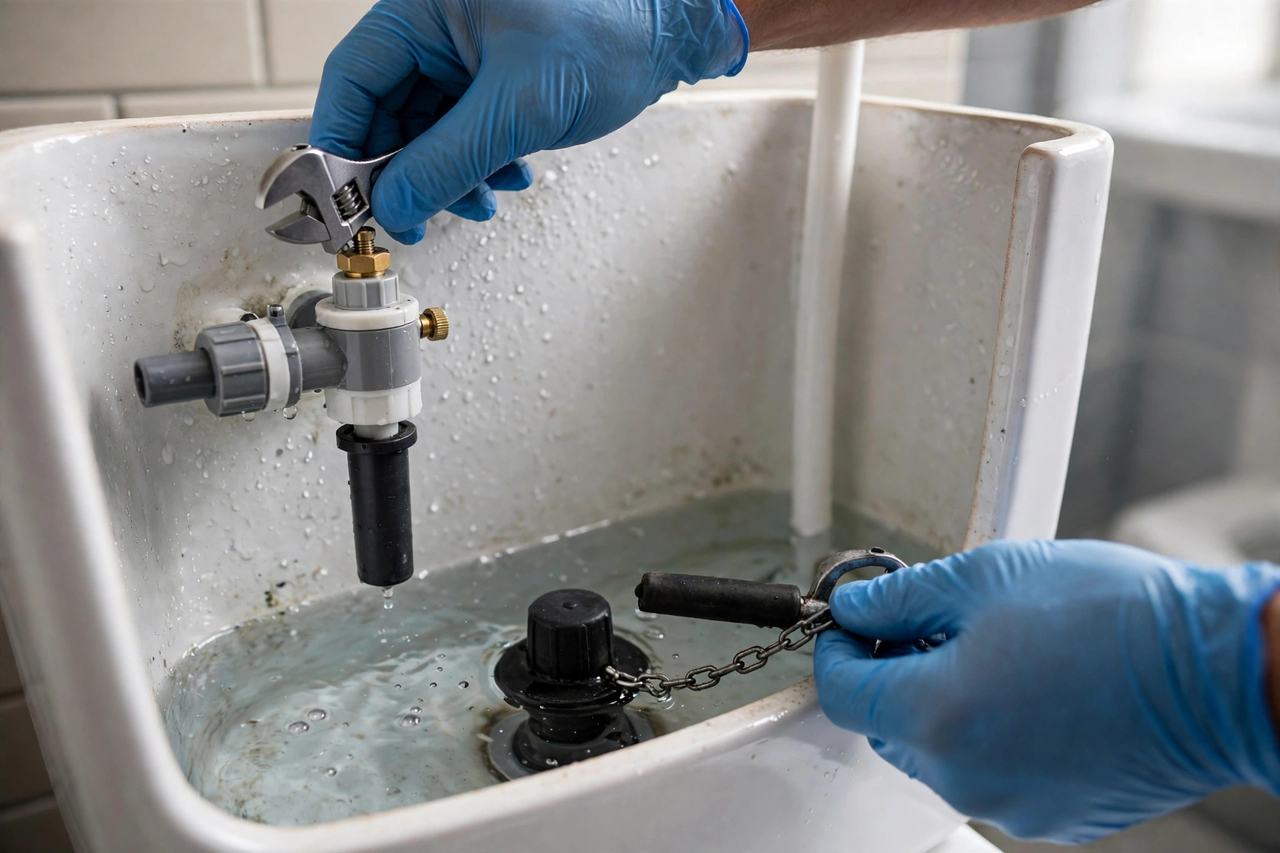
Toilet repair in Denver is the diagnosis and fix of a toilet that runs constantly, flushes weakly, leaks at the base, or rocks on the floor. A running toilet is usually a flapper that no longer seals or a fill valve that will not shut off, and it wastes water around the clock. A weak flush can be a low water level, a clogged rim jet, or a drain problem further down the line. A leak at the base points to a failed wax ring, and a rocking bowl means the flange or the floor beneath it needs attention. In older Denver homes, the brass shutoff behind the toilet is often seized and the supply line brittle, so we check those before any repair is agreed.
! Common warning signs
A toilet that runs all night
A flapper that no longer seals or a fill valve that will not shut off keeps the tank refilling. It wastes water constantly and it will not fix itself.
A weak or incomplete flush
A low tank level, clogged rim jets, or a partial blockage in the drain all show up as a flush that does not clear the bowl. Each has a different fix.
Water at the base or a rocking bowl
Water at the base usually means the wax ring has failed. A bowl that rocks means the flange bolts or the floor beneath need attention before the seal can hold.
Scope of work
What a toilet repair visit covers
A toilet repair starts inside the tank: we check the flapper, the fill valve and the wax ring to find whether the running, the weak flush or the rocking base is a tank fault or a floor fault. Here is what the visit covers.
-
01
Tank diagnosis
We test the flapper, fill valve, and overflow tube, and check the water level, so a running toilet is fixed at the part that actually failed.
-
02
Flush testing
We check the rim jets and the trapway for blockages, and test the flush against the drain, so a weak flush is not blamed on the toilet when the drain is the cause.
-
03
Base and seal check
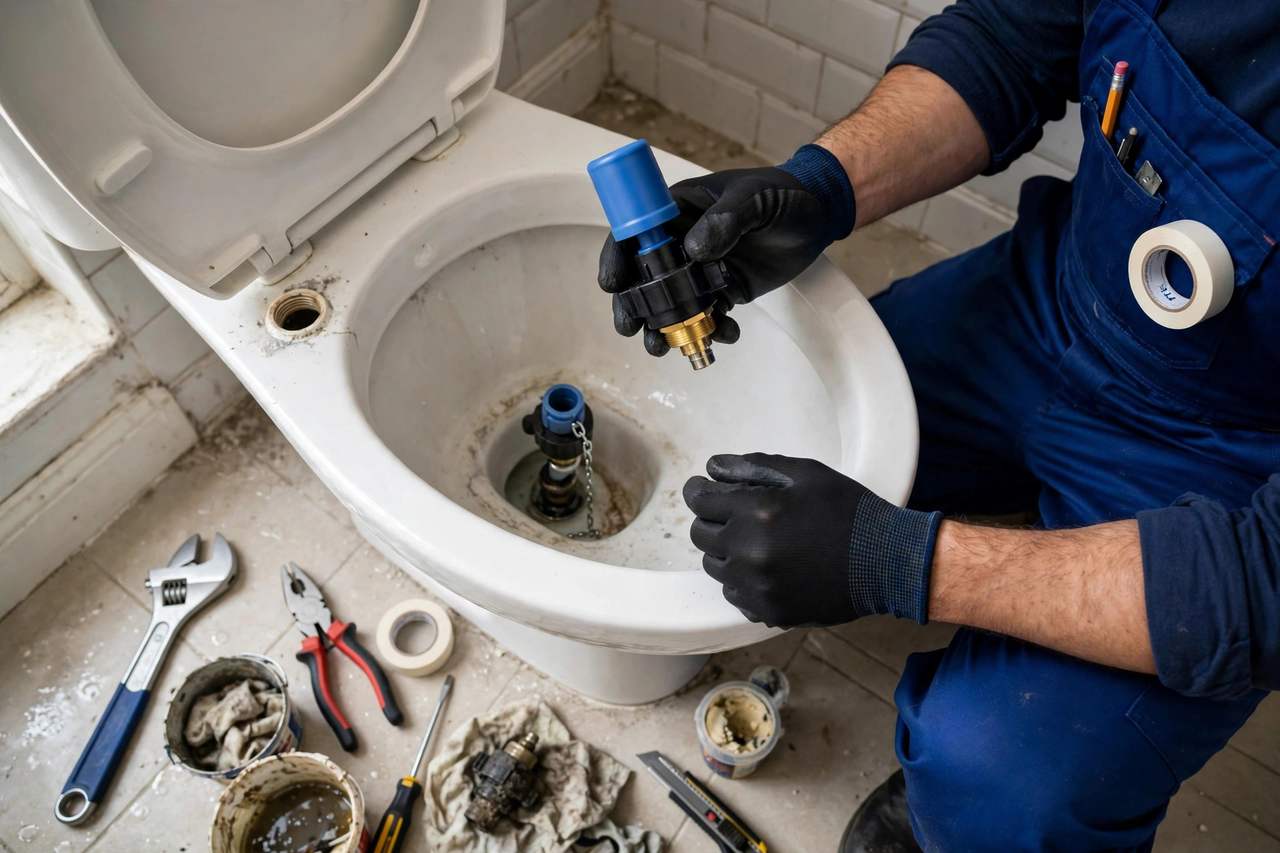
The wax ring, flange, and floor are checked when water appears at the base or the bowl rocks, because a new seal will not hold on a failed flange.
-
04
Supply line and shutoff check
Behind the toilet, the shutoff valve and supply line are checked first: in older Denver homes the brass has often seized and the line has gone brittle.
Repair or replace: how the call is made
A toilet with a failed flapper, fill valve, or wax ring is worth repairing, and most are. A toilet with a cracked bowl or tank, a corroded trapway, or a flange that has failed with the floor beneath it is a different conversation, and we lay out the replacement option when the diagnosis points that way.
Call (720) 599-7253Tools and methods we use
Flapper and fill valve testing
Checks the seal and the shutoff level so a running toilet is fixed at the part that failed, not by replacing the whole tank mechanism.
Closet auger
Clears blockages in the trapway without scratching the porcelain, which is how we tell a toilet blockage from a drain blockage.
Flange and level tools
Checks the flange height and the floor level so a rocking bowl is fixed at the cause rather than shimmed and left to fail again.
Leak tracing
Finds whether water at the base comes from the wax ring, the tank bolts, or the supply connection, since each has a different fix.
Local execution
Toilet repair in Denver runs into the city's older housing stock. In Baker and Park Hill, 1920s and 1930s homes often still have original toilets with parts that have not been made in years, and the shutoff behind the bowl is frequently seized brass. In Capitol Hill and West Colfax, cast-iron drains and older stacks mean a weak flush is sometimes a drain problem rather than a toilet problem, and we test the drain before replacing parts. Denver's freeze-thaw cycle also matters: a toilet against an exterior wall in a cold snap can see its supply line freeze, and the damage often shows only at thaw.
Where toilet repair comes up most in Denver
What to tell us when you call
Toilet running or leaking? Call to book a repair visit
What to do while you wait
A running toilet wastes water, and a leak at the base can damage flooring, so neither should wait long. Call (720) 599-7253, describe what the toilet does, and we will confirm availability when you call. If water is leaking at the base, shut off the valve behind the toilet and avoid flushing until we have seen it.
What to expect from your toilet repair
Call and describe the fault
Call (720) 599-7253 and tell us what the toilet does: runs, flushes weakly, leaks at the base, or rocks. We set a time that fits your day.
On-site diagnosis
We test the tank parts, check the flush against the drain, and inspect the base, flange, and supply line so the fault is found before any part is replaced.
Repair and testing
The failed part is replaced or the seal is reset, and the toilet is flushed several times to confirm the repair holds and the base stays dry.
What shapes the cost of toilet repair in Denver
No price is published for a toilet repair: the fault and the state of the toilet and the floor beneath it set the scope. We talk through what the repair involves before any work starts, and agree the scope with you before any work starts.
The fault itself
A failed flapper and a failed wax ring are different repairs with different parts and different amounts of work. The diagnosis sets the scope.
Toilet age and parts
A recent model with standard parts is a straightforward repair. An original toilet with parts that are no longer made can take longer to source.
Flange and floor condition
For a base repair, the flange and floor decide the job: a failed flange or a damaged floor has to be put right before a new seal can hold.
Before any work starts
Frequently asked questions
Why does my toilet keep running?
Usually a flapper that no longer seals or a fill valve that will not shut off. Either one keeps the tank refilling and wastes water around the clock. Replacing the failed part stops it.
Why is my toilet flushing weakly?
A low tank level, clogged rim jets, or a partial blockage in the drain can all cause a weak flush. We test the flush against the drain so a drain problem is not blamed on the toilet.
What causes water at the base of a toilet?
Usually a failed wax ring, but it can also be a tank bolt or a supply connection. We trace the water to its source before replacing anything, because each cause has a different fix.
Should I repair or replace my toilet?
A toilet with a failed flapper, fill valve, or wax ring is worth repairing. A toilet with a cracked bowl or tank, or a failed flange with floor damage, is not. We lay out both options when the diagnosis points that way.
Further reading: How to fix a running toilet with simple adjustments and Why is my toilet running constantly, and how to stop it.
Related services
Toilet Installation
If the toilet is past repair, the installation page covers selecting and fitting a replacement, including flange and floor checks.
Leak Detection
A leak with no visible source is followed, not guessed at: fitting, line or fixture, with the source confirmed before any work is agreed.
Toilet trouble in Denver? Call us
Call (720) 599-7253 and tell us what your toilet does. We will confirm availability and find the failed part.