
Pipe replacement in Denver when patching stops working
If your Denver home keeps springing leaks, running rusty water, or losing pressure at every faucet, the problem is the run, not the joint. We replace failing galvanized or corroded copper lines with new copper or PEX, then pressure-test every run before we close the walls. Call (720) 599-7253 to book a visit.
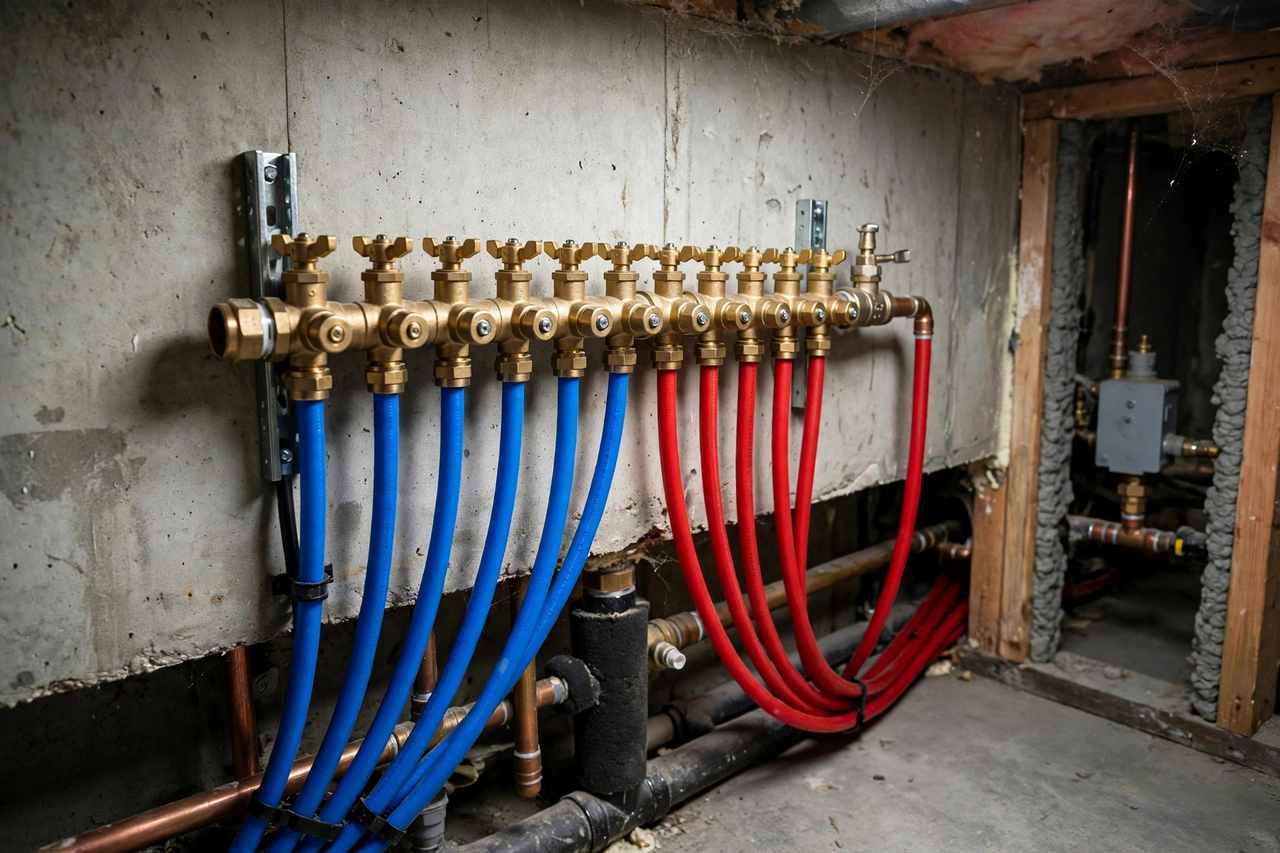
Service overview
What pipe replacement in Denver actually involves
Pipe replacement in Denver is the removal and reinstallation of water supply lines that have failed or are failing, rather than a patch on one bad section. It covers a single run that keeps leaking, a branch that has lost pressure to scale and rust, and a section of pipe that has failed three times in two years. The decision point is simple: when the same run fails again, the run is the problem, and replacing it costs less over time than patching it.
! Common warning signs
Pinhole leaks that keep appearing in different spots
Each one is a small flood waiting to happen, and they usually show up in clusters. Three leaks in two years means the whole run is failing, not just the joint that leaked this time.
Brown or yellow water after the house sits
That discoloration is rust shedding off the inside of galvanized steel. It stains fixtures, ruins laundry, and signals the pipe walls are already thin.
Pressure drops when two fixtures run at once
Scale buildup narrows old pipes from the inside until flow is cut in half. It gets worse every year, and no amount of fixture replacement fixes it, because the restriction is in the run.
Scope of work
What is included in a pipe replacement
Every replacement we quote includes the work below as standard, not as add-ons. If something on your property falls outside this scope, we tell you before work starts.
-
01
Replacement of the failing run
Every accessible hot and cold supply line in the failing run gets replaced with new copper pipe or PEX tubing, including the runs behind kitchen and bathroom walls. We map the run first, so the replacement covers the failure and not just the wettest spot.
-
02
New shut-off valves and fittings
Old gate valves seize and fail. We install new quarter-turn shut-off valves at every fixture on the replaced run, plus fresh fittings on every connection.
-
03
Permit and inspection handling
We file the Denver plumbing permit, schedule the rough-in inspection, and meet the inspector on site. You do not chase paperwork or wait around for a sign-off.
-
04
Pressure test and drywall patch
Every new line is pressure-tested before walls close, and every opening gets patched, taped, and textured to a paintable finish. We leave the house ready for paint.
Why Denver homeowners replace instead of patch
Patching buys you months. Replacing the run buys you decades. That is the trade-off in one line, and it is why most of our replacement calls come from homes that have already paid for two or three patches on the same run. A new run also ends the pressure complaints, the rusty water, and the water damage repairs that follow each new leak.
Book a pipe replacement visitTools and methods we use on every replacement
Pipe camera inspection
Lets us see inside the existing lines before we quote, so we know whether you need a full run replacement or a partial one. No guesswork, and no upselling a whole-house job when a run will do.
PEX crimping tool
Creates the permanent, leak-free connections on PEX tubing runs. Every crimp ring is checked by hand and pressure-tested before the wall closes.
Soldering torch
Used for copper pipe joints where we install copper instead of PEX. Clean, lead-free solder on every connection, tested at full pressure before sign-off.
Leak detection equipment
Confirms the exact source of a leak before we open anything up. It separates a leak under a slab from a failing supply line, so the replacement targets the right pipe.
Local execution
Denver's housing stock is the biggest factor in how a replacement goes. Most of the homes we work on were built before 1965, and a large share still have original galvanized steel supply lines that have been narrowing from the inside for sixty years. In Capitol Hill and Washington Park, the runs sit behind plaster and lathe in walls that have never been opened, so access is the work. In Park Hill and Highland, the runs are longer and the fixtures are spread across two floors, so the mapping matters more. In Berkeley and the 1950s southwest, Harvey Park and Mar Lee, the ranches are hitting the age where copper pinholes arrive in clusters and the galvanized runs are closing from the inside. Denver Water's supply is soft to moderately hard, with annual-report averages in the range of about 89 to 105 mg/L, so scale is a steady contributor, not the whole story.
How pipe replacement runs in Denver
What pipe replacement usually looks like
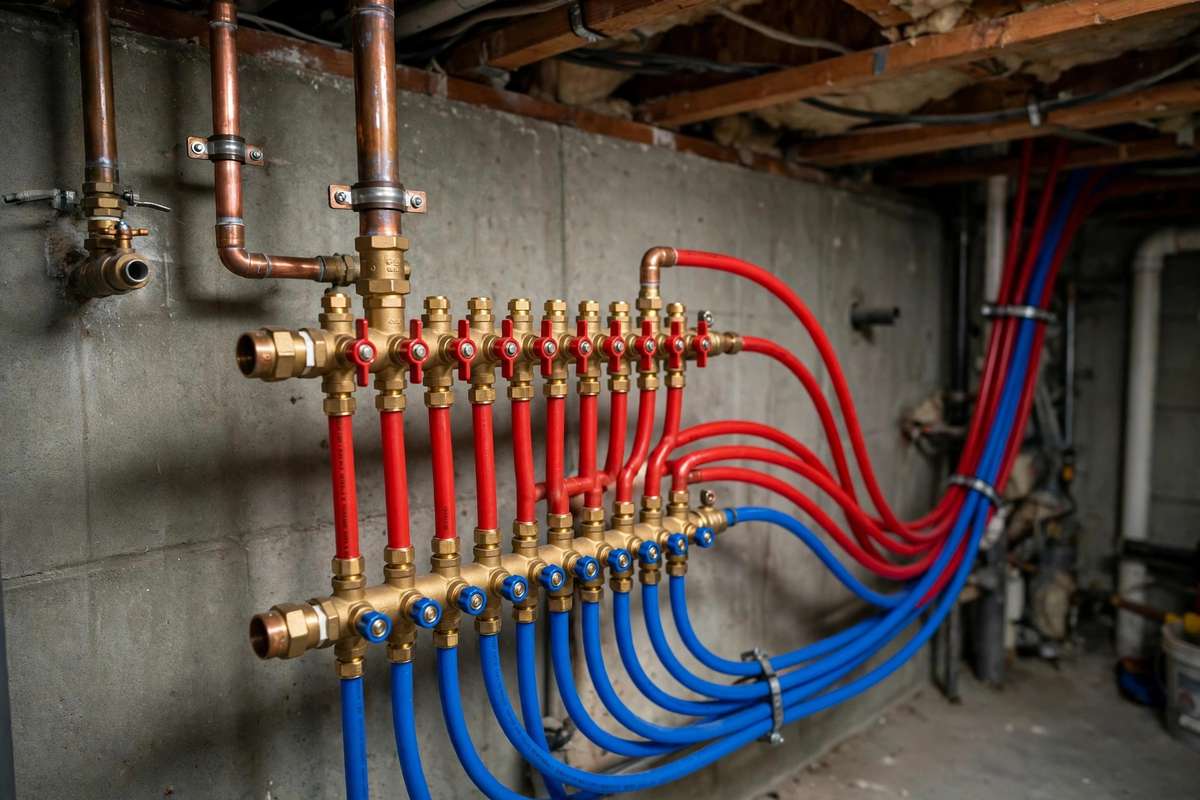
Three leaks on one run means the run is the problem
Call (720) 599-7253 to book a pipe replacement visit
A run that has failed three times is not three separate problems. It is one failing run, and the next leak is already forming. Call (720) 599-7253 to book a visit, and we will confirm availability when you call. We inspect the run, map the fixtures it serves, and quote the replacement before any wall opens, so you can compare the replacement against another patch with real numbers in front of you.
How our pipe replacement process works
Inspection and mapping
We start with a pipe camera inspection and a full walkthrough of every fixture, valve, and visible run. You get a written scope showing which lines get replaced and which stay.
Permit and scheduling
Denver plumbing permit paperwork gets filed before any work starts, and we handle the inspection scheduling. You pick the start date, and we confirm the scope in writing before we begin.
Demo and rough-in
We cut out the old galvanized or copper lines and run new copper pipe or PEX tubing through the same chases where possible. Floors get drop cloths, furniture gets covered, and every new line is pressure-tested before the walls close.
What affects the cost of pipe replacement in Denver
The quote comes before any wall opens, so you know the number before work starts. These are the factors that move it.
Home size and fixture count
A small home with one bathroom replaces far faster than a larger home with three and a half. Every fixture adds supply lines, shut-off valves, and connections.
Wall type and access
Plaster walls in pre-war homes take longer to open and patch than drywall, and finished basements limit where we can run new lines. Crawl space access changes the routing too.
Material choice
Copper pipe costs more in materials than PEX tubing, though both are quoted the same way. PEX resists freezing better and installs with fewer wall openings, which is why it is often the choice for runs in exterior walls.
How to reach us
Pipe replacement questions Denver homeowners ask
How much does pipe replacement cost in Denver?
The cost depends on the size of the home, how many fixtures the run serves, the wall type, and the material. A single run is one kind of job; a whole-house replacement is another. We quote the replacement before any wall opens, so you know the number before work starts.
How long does pipe replacement take in Denver?
A single run usually takes a day or two from opening to patch. A larger replacement takes longer, and the schedule depends on how many fixtures the run serves and how much wall has to open. We confirm the schedule in writing before we begin.
Should I replace copper pipes in Denver?
Only if they are failing. Copper that is showing pinhole leaks, green staining, or pressure loss is worth replacing. Copper in good condition, with no leaks and steady pressure, is not a replacement candidate, and we will say so.
Who does pipe replacement in Denver near me?
5280 Denver Plumbing handles pipe replacement across Denver, from Capitol Hill and Washington Park to Highland and University Hills. We pull the Denver plumbing permit on every replacement and pressure-test every run before the walls close.
Further reading: Best plumbing services for older homes in Denver.
Related services
Emergency Plumbing
A burst pipe cannot wait for a scheduled replacement. We shut the water off, stabilize the line, and schedule the permanent replacement as soon as the home is dry.
Drain Cleaning
Supply lines and drains age together. If a replacement is happening anyway, a drain cleaning pass on the main drain clears years of buildup while the walls are open.
Whole House Repiping
When the failing run is one of several, the honest question is whether the whole house needs new lines. Repiping replaces every supply line in the home in one project, with one permit and one inspection.
Tired of patching the same run? Call (720) 599-7253
Call (720) 599-7253 to book a pipe replacement visit. We will confirm availability when you call, map the failing run, and quote the replacement before any wall opens.