
Basement plumbing in Denver, from floor drains to fixtures
Basement plumbing is not one job. It is a basement bathroom, a sewage ejector, a floor drain that backs up, a sump pump, and a leak under the slab, and each one is a different service with a different diagnosis. This page is the hub: it lays out the basement jobs, and links to the service that fits yours. Call (720) 599-7253 to book a visit.
Service overview
What basement plumbing in Denver covers
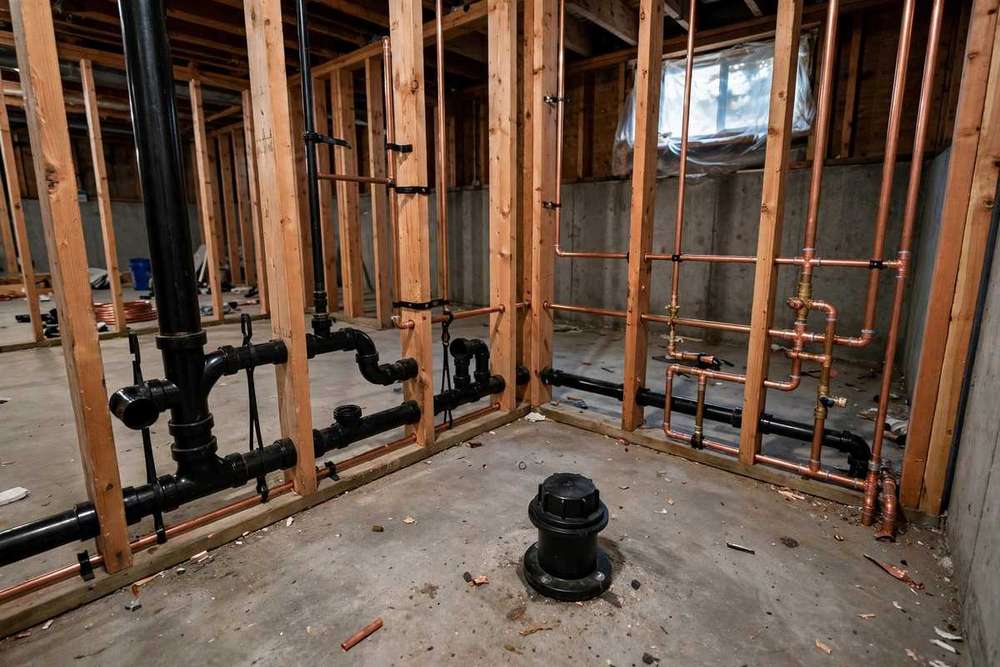
Basement plumbing in Denver starts with the foundation: basements are the most common foundation type in the city, and most homes keep their lowest drain, their main shutoff, and often a bathroom or laundry below grade. That makes the basement the room where plumbing problems show first and cost the most: a floor drain backup, a sewage ejector that stops lifting, a bathroom added to a rental conversion, a sump pump that fails in a storm, or a leak under the basement floor slab. This page covers each one, and links to the service that handles it.
! Basement problems we see most
Floor drain backing up after heavy water use
When a basement floor drain backs up, the main line is blocked past the point where the basement ties in. Every gallon run upstairs lands on the basement floor, and the finished space below grade takes the water first.
Basement bathroom that drains slowly or smells
A basement bathroom on a sewage ejector depends on the pump lifting waste up to the main. When the pump fails, or the vent is wrong, the fixtures drain slowly and the room smells. The ejector, the vent, and the drain are three separate suspects.
Water on the basement floor with no visible source
Water on a basement floor with no visible source is usually one of three things: a leak under the slab, a failed sump pump, or groundwater finding its way in. The diagnosis separates them before anything is opened.
Scope of work
What our basement plumbing work includes
Basement work is a cluster of services, not a single job. Here is what the cluster covers, and which service handles each piece.
-
01
Basement bathroom rough-in and finish
We rough in and finish basement bathrooms, including the drain, vent, and supply runs, and the sewage ejector where the fixtures sit below the main. The work is quoted on the layout, not on a one-size-fits-all scope, because no two basements are the same.
-
02
Sewage ejector and lift station
We install and repair sewage ejectors that lift waste from below-grade fixtures up to the main. A failed ejector is the most common reason a basement bathroom stops working, and it is a repair, not a remodel.
-
03
Floor drain backup diagnosis
We camera the main line to find whether the backup is a blockage, a belly, or a failed lateral. Clearing treats the symptom; the camera shows whether the pipe itself has failed.
-
04
Leak under the basement slab
We locate leaks under the basement floor slab with pressure testing and thermal imaging, then quote the repair from the finding. Expansive clay stressing buried copper is the usual cause in Denver.
Why basement plumbing is different in Denver
Denver's basements are full basements, not crawlspaces, and they are finished space in most homes, which is why a basement problem costs more than the same problem upstairs. The ground makes it harder: expansive bentonite clay swells when it wets and shrinks when it dries, stressing the buried lines under the slab, and spring snowmelt and heavy rain push hydrostatic pressure against basement walls. A basement job is therefore a diagnosis job first, and the diagnosis is what keeps it small.
Book a basement plumbing visitTools and methods we use in basements
Pipe camera inspection
Lets us see inside the main line and the basement drains to confirm blockages, cracks, and bellies before anything is opened. The camera is how a floor drain backup is separated from a failed lateral.
Leak detection equipment
Acoustic listening and thermal imaging locate leaks under the basement floor slab without opening the concrete first. The repair is quoted from the finding, not from a guess.
Sewage ejector and pump equipment
Used to install and repair the ejectors that lift waste from below-grade fixtures up to the main, and to test them under load before we call the job done.
Drain snake and hydro jetting
Clears the basement drains and the main line when the problem is buildup or roots, and scours the pipe wall clean so the backup does not return within weeks.
Local execution
Denver's basements are the room where the city's plumbing history shows. In Capitol Hill and Baker, the pre-1950 homes have full basements with cast iron stacks and clay laterals, and the basement bathroom is often a conversion added decades after the house was built, on the original stack with inadequate venting. In University and University Park, the student-rental conversions add basement bedrooms and bathrooms to the same stock, and the added fixtures load the original cast iron. In Park Hill, the basements sit under long front yards, so the lateral runs further and the floor drain is further from the main. In Harvey Park and Mar Lee, the 1950s ranches have finished basements with a bedroom, a full bathroom, and a laundry, all sitting on a slab that moves with the bentonite clay beneath it. In Athmar Park, where our shop sits, the river-adjacent blocks carry a higher water-table load, and the basement floor drain is the first place a main-line backup shows. The main shutoff in most Denver homes sits in the basement, near where the service enters on the street-facing wall, which is why the basement is also the room to know best before anything goes wrong.
How basement plumbing runs in Denver
What basement work usually looks like
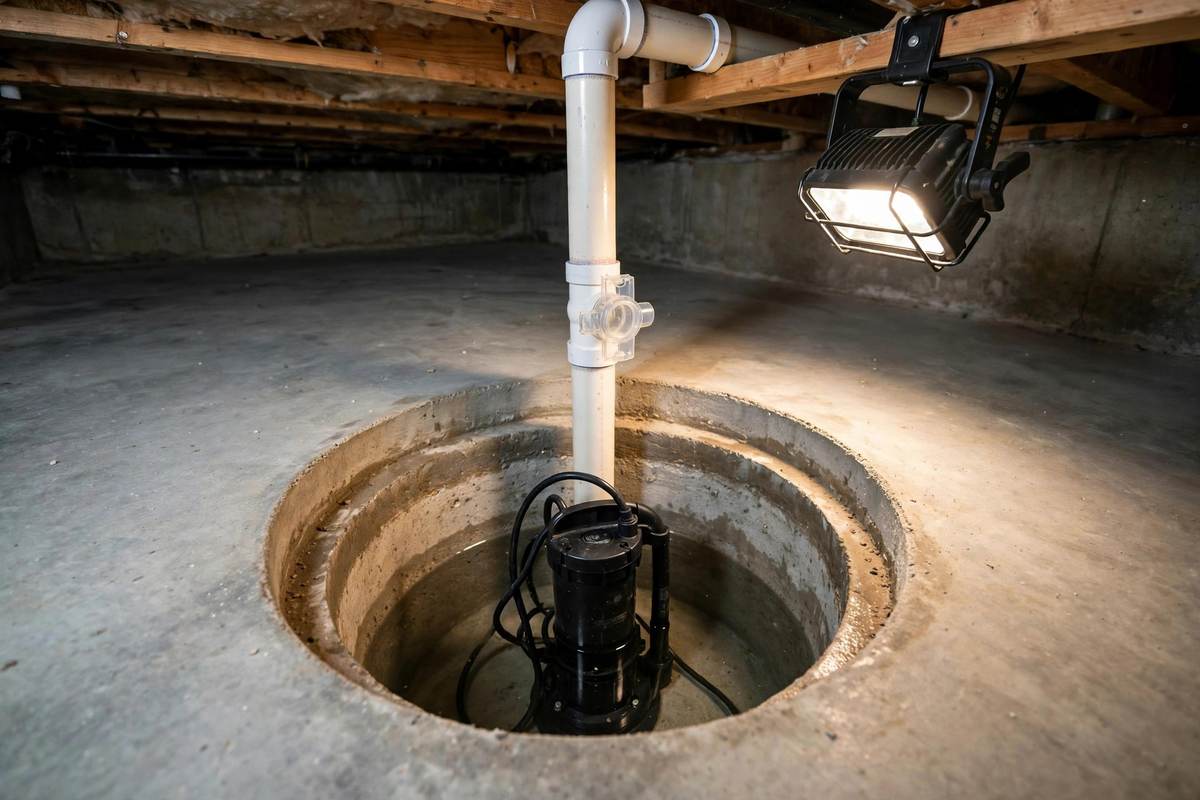
A basement problem is a diagnosis problem first
Call (720) 599-7253 to book a basement plumbing visit
Water on a basement floor, a floor drain that backs up, or a basement bathroom that has stopped working all have several possible causes, and the repair depends on which one it is. Call (720) 599-7253 to book a visit, and we will confirm availability when you call. We diagnose first, with a camera or a pressure test, and quote the repair from the finding.
How our basement plumbing work goes
Call and quick questions
You call (720) 599-7253. We ask what is happening in the basement, whether the floor drain is involved, and whether the home has a sump pump or a sewage ejector. Those answers tell us which service the visit is.
Diagnosis on site
We camera the main line, pressure-test the supply, or test the ejector under load, depending on the symptom. The repair is quoted from the finding, not from a guess, and if the job belongs to a different service, we say so.
Repair and test
We repair the failed piece, whether that is a section of pipe, an ejector, or a line under the slab, and test it under load before we leave. Ask us for a written summary of what failed and what was replaced.
What affects the cost of basement plumbing in Denver
Basement work is quoted on the job itself, because no two basements are the same. These are the factors that move the number.
Which basement job it is
A floor drain backup, a failed ejector, a new basement bathroom, and a leak under the slab are four different jobs with four different scopes. The diagnosis is what sorts them, and the quote follows the diagnosis.
Access under the slab
A leak under the basement floor slab takes longer to reach than a leak in an accessible wall. Opening concrete, rerouting a line, and restoring the slab are the work, and the access is what sets the time.
Finished space around the work
A finished basement with a bedroom, bathroom, and laundry needs protection and restoration that an unfinished basement does not. The finished space is part of the quote, not an afterthought.
How to reach us
Basement plumbing questions Denver homeowners ask
How much does basement plumbing cost in Denver?
The cost depends on which basement job it is: a floor drain backup, a failed ejector, a new basement bathroom, and a leak under the slab are four different jobs. We diagnose first and quote the work from the finding, so you know the number before anything is opened.
Why does my basement floor drain back up in Denver?
A basement floor drain backs up when the main line is blocked past the point where the basement ties in. The usual causes in Denver are root intrusion in clay laterals, a belly where the pipe has settled, and heavy water use upstream. A camera inspection shows which one it is.
What is a sewage ejector, and when does a Denver basement need one?
A sewage ejector is a pump that lifts waste from fixtures below the main sewer line up to it. Any basement bathroom or laundry that sits below the main needs one. When the ejector fails, the fixtures drain slowly or stop, and the room smells. It is a repair, not a remodel.
Is a leak under my basement slab a slab leak?
Yes, in Denver that is the usual form of a slab leak: a water line running under the basement floor slab, stressed by expansive clay or by pre-mid-1990s copper reaching the end of its life. We locate it with pressure testing and thermal imaging before any concrete is opened.
Further reading: How to prevent frozen pipes in Denver this winter.
Related services
Drain Cleaning
A basement floor drain that backs up is usually a main-line problem. We clear the line, then camera it to see whether the pipe itself has failed.
Leak Detection
Water on a basement floor with no visible source is often a leak under the slab. Acoustic listening and thermal imaging find it before any concrete is opened.
Sewer Line Repair
When the camera shows the lateral has failed, the basement backup is a sewer repair. We fix the failed section and re-camera to confirm the flow.
Basement problem? Call (720) 599-7253
Call (720) 599-7253 to book a basement plumbing visit. We will confirm availability when you call, diagnose first, and quote the repair from the finding.