Water Filtration System Repair in Denver, CO
A filter that leaves the taste unchanged, a reverse osmosis unit that has gone slow, or a housing that leaks usually has a specific cause: a spent cartridge, a fouled membrane, or a failed seal. We find it and fix what actually failed.
Service overview
Cartridge, membrane, or seal: find the fault
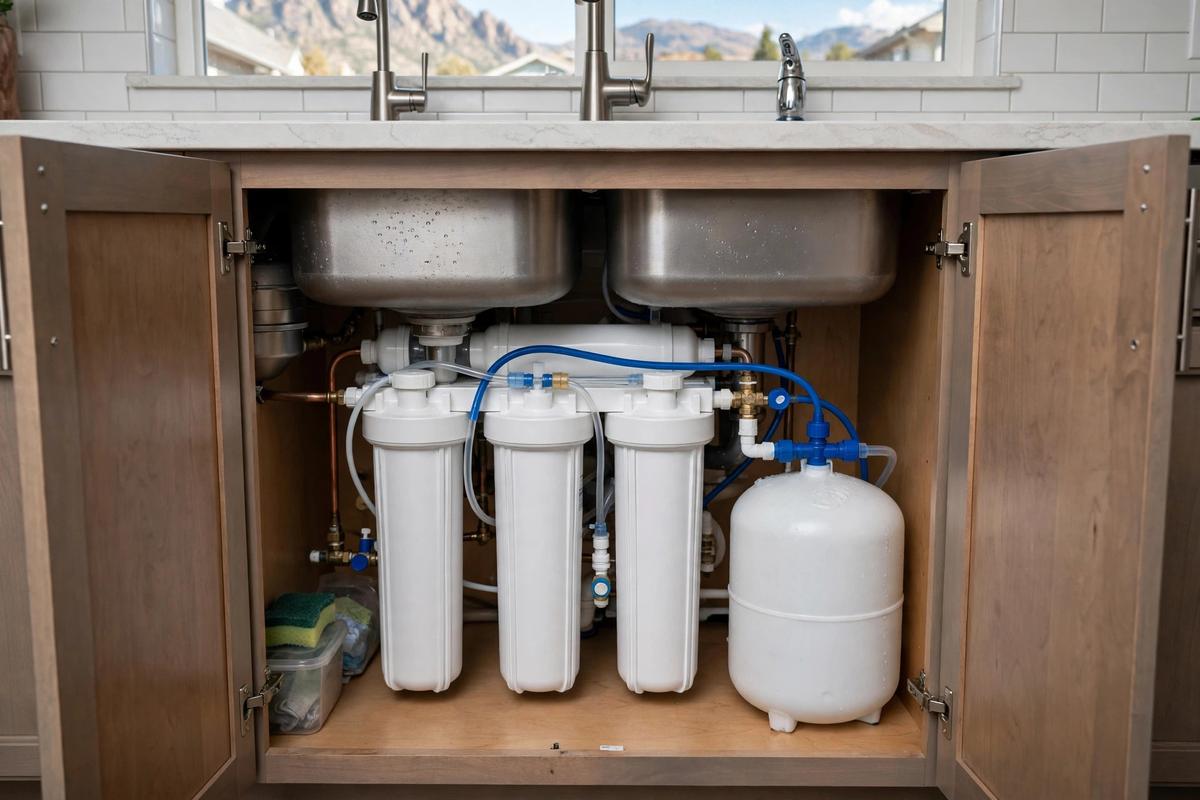
Water filtration system repair in Denver is the diagnosis and fix of a filter that has stopped improving the water, a reverse osmosis unit that has gone slow, or a housing that leaks. The most common cause is a spent cartridge: carbon and sediment cartridges have a service life, and once it is used up the water tastes the same as it did before the filter. A reverse osmosis membrane can foul over time, and the flow drops until the unit is barely producing. A leak at a housing usually means a failed O-ring or a housing that has cracked. We test the water, check the cartridges and the membrane, and inspect the housings in turn, and we do not claim the filter softens water, because it does not.
! Common warning signs
Taste is back, or never left
A spent carbon cartridge no longer removes chlorine taste and odour. Replacing it on schedule restores the water, and testing confirms it.
Reverse osmosis has gone slow
When a reverse osmosis unit barely produces, the flow has usually been narrowed by a fouled membrane or a spent pre-filter. Testing the membrane tells us which one it is.
Leaks at a housing or fitting
A failed O-ring or a cracked housing lets water out at the filter itself. The source decides the fix, and the housing is checked before anything is replaced.
Scope of work
What a water filtration repair visit covers
A filtration repair starts with the water: we test flow and taste, check the cartridges and the membrane, and find whether the fault is a spent filter or a failed part. Here is what the visit covers.
-
01
Water testing
We test the water before and after the system so the fault is confirmed by the water itself, not by a guess.
-
02
Cartridge inspection
The carbon and sediment cartridges are checked for service life, so a spent cartridge is replaced rather than the whole system.
-
03
Membrane testing
The reverse osmosis membrane is tested for flow and rejection, so a fouled membrane is found before the unit is written off.
-
04
Housing and seal check
The housings, O-rings, and fittings are inspected for leaks, since a failed seal is a different fix from a spent cartridge.
Repair or replace: how the call is made
A filter with a spent cartridge or a failed O-ring is worth repairing, and most are. A system with a fouled membrane, cracked housings, and a control that has failed together is a different conversation, and we lay out the replacement option when the diagnosis points that way.
Call (720) 599-7253Tools and methods we use
Water testing
Tests the water before and after the system so the repair is confirmed by the water itself.
Cartridge and membrane testing
Checks the service life of the cartridges and the flow of the membrane so the failed part is found.
Housing and O-ring tools
Inspects and reseals the housings so a leak is fixed at the seal rather than by replacing the system.
Flow testing
Confirms the flow is right after the repair, so the system works as designed from the first use.
Local execution
Filtration repair in Denver comes up most where systems have been running for years without a cartridge change. In Baker and Capitol Hill, older homes with whole-house carbon filters often have housings that have not been opened in years, and the O-rings have hardened. In Park Hill and Montclair, reverse osmosis units under kitchen sinks go slow when the pre-filters are spent and the membrane is left to do work it was not designed for. Denver Water reports hardness of about 89–105 mg/L (5.2–6.1 gpg), and that hardness is a softener's job, not a filter's, which is why a filter that leaves the water hard is not a fault.
Where filtration repair comes up most in Denver
What to tell us when you call
Filter not working? Call to book a repair visit
What to do while you wait
A filter that has stopped working will not damage the house, but the water will taste the way it did before the filter. Call (720) 599-7253, describe the system and the water, and we will confirm availability when you call. If a housing is leaking, shut off the bypass valve to the filter and place a bucket beneath it.
What to expect from your water filtration system repair in Denver
Call and describe the fault
Call (720) 599-7253 and tell us what kind of system it is and what the water does. We set a time that fits your day.
On-site diagnosis
We test the water, inspect the cartridges and the membrane, and check the housings and seals so the fault is found before any part is replaced.
Repair and testing
The spent cartridge or failed seal is replaced, and the water is tested again to confirm the system is treating the water properly.
What shapes the cost of water filtration repair in Denver
A filtration repair has no published price: the fault and the state of the system set the scope. Call and describe the fault, and we will talk through what decides the price before agreeing to anything.
The fault itself
A spent cartridge and a fouled membrane are different repairs, and a cracked housing is different again. The diagnosis sets the scope.
System age and condition
A recent system with one spent cartridge is a straightforward repair. An older system with a fouled membrane and hardened seals may not be worth repairing.
Access to the system
A filter in an open utility area is reached in minutes; one packed into a tight cabinet takes longer to get at, and access shapes the visit.
Before any work starts
Frequently asked questions
Why does my filtered water taste the same as tap water?
Usually a spent carbon cartridge that has reached the end of its service life and no longer removes chlorine taste and odour. Replacing the cartridge on schedule restores the water, and testing confirms it.
Why is my reverse osmosis unit so slow?
Slow output from a reverse osmosis unit usually means a fouled membrane or a spent pre-filter narrowing the flow. We test the membrane to find which one it is, and replacing the failed part restores the flow.
Why is my filter housing leaking?
A failed O-ring or a cracked housing lets water out at the filter itself. We inspect the housings and seals before replacing anything, because each cause has a different fix.
Will a filter make my water soft?
No — a filter and a softener do different jobs. A filter targets taste, odour, chlorine and sediment; hardness is untouched. A household that wants soft water needs a softener, which is a different system.
Related services
Water Filtration System Installation
If the system is past repair, the installation page covers whole-house carbon and point-of-use reverse osmosis options.
Water Softener Repair
If hardness is the problem rather than taste, the softener repair page covers salt bridges, resin, and regeneration faults.
Filter not working in Denver? Call us
Call (720) 599-7253 and tell us what kind of system it is and what the water does. We will confirm availability and find the fault.