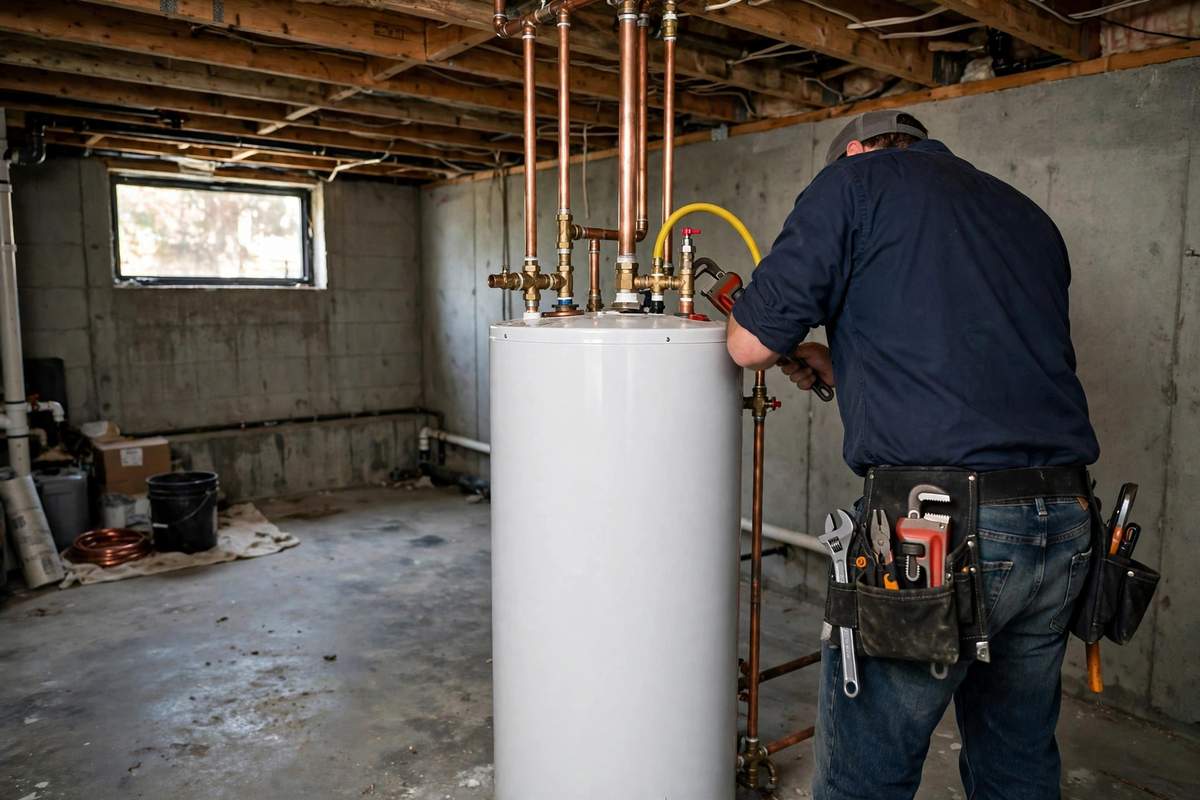
Water at the base of a water heater has three common causes, and only one of them is a simple fix. The first thing to do is work out where the water is actually coming from, because a leaking tank and a leaking drain valve are very different jobs.
First: turn off power and water
If the leak is more than a slow drip, turn off the power or gas to the heater and shut off the cold water supply to the unit. Do not touch water near electrics. Mop up what you can and move anything the water can damage. Then look for the source.
Drain valve
The drain valve at the base of the tank can drip if it is loose, worn, or was not closed fully after a flush. Try tightening it gently by hand. If it keeps dripping, the valve needs replacing. This is the best-case cause: a valve replacement, not a heater replacement.
Temperature and pressure relief valve
The T&P valve is on the side or top of the tank, with a discharge pipe running down. If it is dripping, the tank may be overheating or the pressure may be too high, often because the expansion tank on a closed system has failed. Do not cap or plug the discharge pipe. A dripping T&P valve needs a plumber to find the cause.
Tank corrosion
A leaking tank cannot be repaired
If water is coming from the tank itself, from a seam or from under the jacket, the tank is corroded from the inside and the heater needs replacing. No repair fixes a leaking tank. Denver's soft to moderately hard water leaves scale that shortens tank life, and a tank that is over 10 years old with a bottom leak is at the end of its life. See repair or replacement: which is right for you.
Condensation vs. leak
Winter condensation
In winter, a small amount of water at the base can be condensation on a cold tank, especially on a new install or in a cold basement. Condensation dries up and does not return after the tank warms. A leak does not stop. If you are not sure, dry the floor and check again in an hour.
A water heater replacement in Denver needs a permit and inspection, with an expansion tank on a closed system and code corrections where the existing install does not meet code. See water heater repair and water heater installation. Call (720) 599-7253 if the tank itself is leaking.