Emergency Plumber in Denver, CO
When a pipe bursts, sewage backs up, or a water heater tank lets go, the first job is to stop the water. Call (720) 599-7253, tell us what is happening and whether you have shut off the main, and we will confirm availability and talk through what happens next. We are based in Athmar Park, Denver, and work across the city's neighborhoods.
Service overview
What emergency plumbing in Denver covers
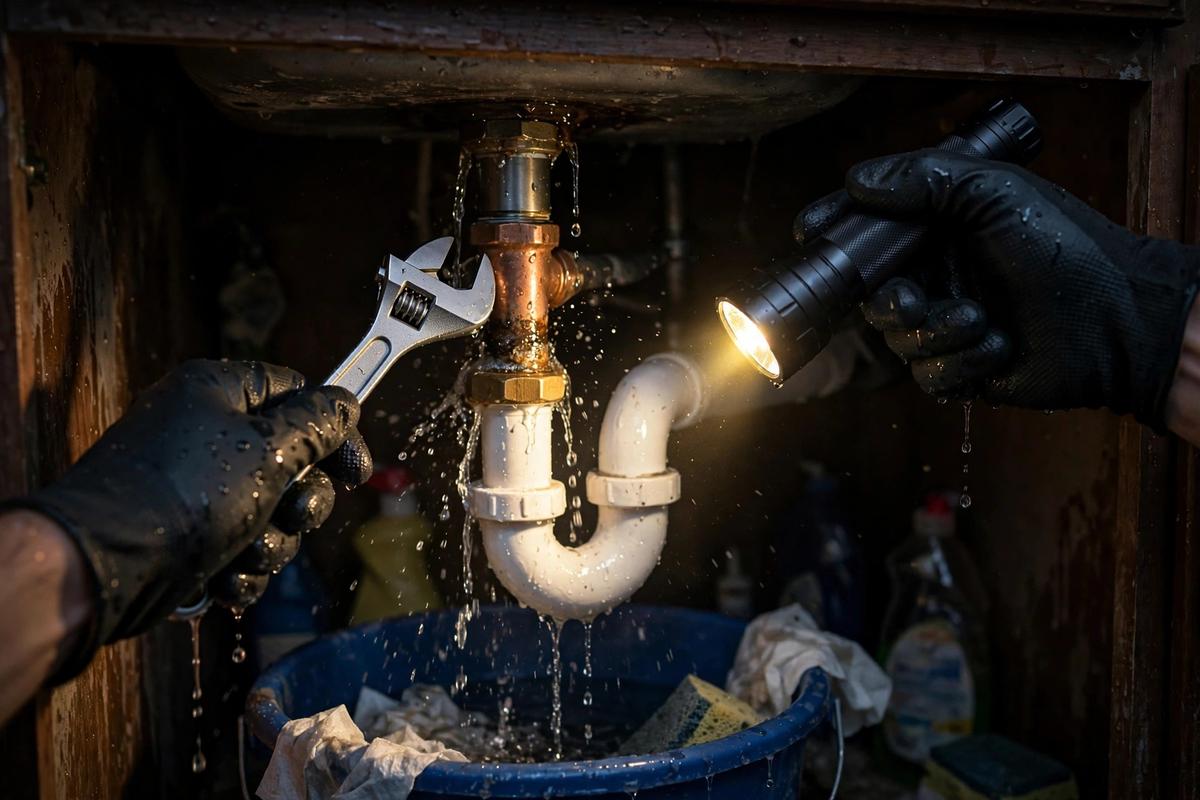
An emergency plumber in Denver stops active water loss and makes a home safe again when a pipe, drain, or fixture fails without warning. That covers burst supply lines, sewer backups into a basement, a leaking water heater tank, and a line that has frozen and split. The common thread is water where it should not be, and the first step is always the same: shut off the main if you can do so safely, then call.
! Problems we treat as urgent
Burst pipe spraying water behind a wall or under a sink
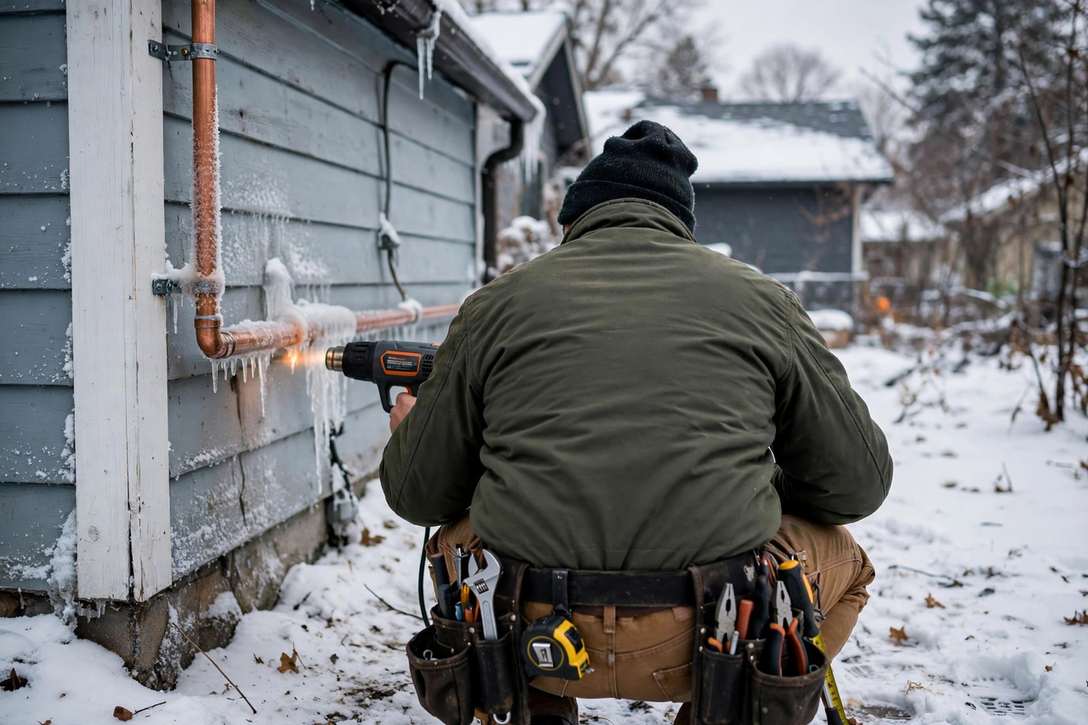
A split supply line releases water continuously until the main is shut off. Denver's freeze-thaw cycle is the usual trigger: the split often shows only at thaw, feet from where the ice plug formed, in an exterior wall, crawlspace, or garage.
Sewage backing up into a basement floor drain
Sewage in a basement floor drain means the main line is blocked or the lateral has failed. Homeowners in Denver own the private lateral from the house to the city main, including the section under the street, so the repair is on the homeowner's side of the line.
Water heater leaking from the tank or base
A tank that leaks from its shell is done. The leak rarely stays small, and a tank that has started to go will keep filling the space around it. Turn off the water to the unit if you can reach the valve safely, then call.
Scope of work
What an emergency call from us includes
Every urgent call follows the same order: stop the water, find the failure, fix what can be fixed, and confirm the fix holds. Here is what that covers, and what gets scheduled as follow-up work if the repair needs more than one visit.
-
01
Find the failure first
We trace the water to its source with a camera, pressure test, or listening equipment before opening anything. You see what we find, and the repair targets the actual failure rather than the wettest patch of drywall.
-
02
Stop the water, then repair
We isolate the failed section, shut off the feed if you have not already, and repair with copper, PEX, or PVC to match what is already in the home. Where a section is too far gone to patch, we say so and price the replacement instead.
-
03
Confirm the fix holds
We restore water, pressure-test the line, and check every joint before we call the job done. A repair that is not tested is a repair that can fail again the same week.
-
04
Leave the space clean
Old parts are hauled out, the work area is wiped down, and ask us for a written summary of what failed and what was replaced, so you have a record for your own files.
Why Denver homeowners call us first
Denver's housing stock is old enough that most urgent calls trace back to pipe that has been in the ground or the walls for decades. More than half of Denver homes were built before 1980, and the pre-1950 stock still runs on galvanized steel, cast iron, and clay. When that pipe fails, the failure is rarely a single clean break, and the value of the call is a diagnosis that finds all of it.
Call nowTools and methods we use
Pipe camera inspection
A camera pushed through a drain or sewer line shows root intrusion, bellies, cracks, and blockages without digging. We can record the footage and show it to you on the monitor before any repair is quoted — ask when you book.
Hydro jetting
High-pressure water scours grease, scale, and root mass off the full pipe wall. It clears what a snake only punches through, and it is the step that tells us whether a line still has life in it.
Leak detection equipment
Acoustic listening and thermal imaging narrow a hidden leak down before anything is opened. That matters in Denver, where expansive bentonite clay stresses buried lines and a leak can masquerade as a ceiling drip two rooms away.
Press and crimp connections
Press fittings and crimp rings make code-compliant copper and PEX connections without open flame in tight spaces, which keeps repair time down on jobs inside finished walls.
Local execution
Denver is not one housing market, and urgent plumbing is not one job. In Capitol Hill, Baker, and Five Points, we are working in pre-1950 buildings with galvanized supply and clay laterals, where a burst line and a sewer backup can arrive together. In Park Hill and Washington Park, the same era of pipe sits under longer front yards and mature trees, so laterals run further and root exposure is higher. In Athmar Park, where our shop sits, and in Harvey Park and Mar Lee, the stock is mid-century ranch, and the failures are pinhole leaks in aging copper and lines under basement slabs stressed by clay that swells and shrinks with the seasons. The first freeze usually arrives in early October and the last in early May, so the freeze season is long, and the split that floods a wall often waits for the thaw to show itself.
How emergency plumbing runs in Denver
What urgent work usually looks like
When water is running, call first
Shut off the main, then call (720) 599-7253
If water is running where it should not be, shut off the main valve first if you can reach it safely. In most Denver homes the main shutoff sits in the basement, near where the service enters on the street-facing wall. Then call (720) 599-7253 and describe what you see: what is leaking, where, and whether the water is still running. We will confirm availability when you call and talk through what to do while you wait. If water is near electrical outlets or the panel, do not step into it; call from a dry place.
What happens when you call
Call and triage
You reach us at (720) 599-7253. We ask what is leaking, where the water is, and whether you have shut off the main. If you have not, we walk you to the shutoff before anything else.
Diagnosis on site
We confirm the source with a camera, pressure test, or listening equipment, and show you what we find. The repair is quoted before work starts, and if the job has options, such as patching a section versus replacing a run, we lay them out with the trade-offs.
Repair and test
We repair with materials matched to the home, pressure-test the line, and check every joint. Ask us for a written summary of the failure and the fix before we leave.
What affects the cost of emergency plumbing in Denver
Urgent work costs more than planned work in most cases, and the reasons are practical rather than mysterious. We quote the repair before we start, so you know the number before any work begins. These are the factors that move it.
When the call comes in
A call that pulls a crew off a scheduled job carries different costs than a call booked in advance. We tell you the price before we head out, and the quote covers labor, standard parts, and cleanup.
Access and how much we open
A repair behind an open cabinet is straightforward. The same failure behind finished drywall, under a basement slab, or buried in the yard takes longer, needs more equipment, and costs more to make right.
Parts and materials
Standard parts such as supply lines, wax rings, and shut-off valves are one kind of job. A failed water heater, a collapsed lateral, or a run of pipe that needs replacing is another, and the material is priced into the quote you approve.
About this business
Emergency plumbing questions, answered
What counts as a plumbing emergency in Denver?
Active water loss, no water at all, sewage backing into the home, or a water heater leaking from the tank. A burst pipe, a sewer backup, and a failed tank are the three we see most, and all three get worse the longer water keeps running.
What should I do first for a burst pipe in Denver?
Shut off the main valve first, then call a plumber at (720) 599-7253. In most Denver homes the main shutoff is in the basement, near where the service enters on the street-facing wall. If water is near electrical outlets or the panel, do not step into it.
Why do Denver pipes burst at the thaw, not in the cold?
In an emergency, the freeze-thaw pattern is what catches Denver homes out: a mild day followed by a single-digit night can freeze a pipe without splitting it, and the burst often shows only at thaw, feet from the ice plug. That is why the first step is always the main shutoff.
Who owns the sewer line when sewage backs up?
In Denver, the homeowner owns the private lateral from the house to the city main, including the section under the street. A backup that traces to the lateral is the homeowner's repair; a camera inspection is how the location is confirmed.
Further reading: Emergency plumbing in Denver: what to do when a pipe bursts.
Related services
Drain Cleaning
A slow drain that keeps backing up is often the first sign of a bigger blockage. We clear kitchen, bath, and floor drains, and camera the line when the clog keeps coming back.
Sewer Line Repair
Sewage backing into a basement floor drain usually traces to the lateral. We camera the line, locate the break or root intrusion, and repair the failed section.
Leak Detection
A hidden leak behind a wall or under a slab can run for weeks before it shows. Acoustic listening and thermal imaging find the source before anything is opened.
Water running where it should not be? Call now
Shut off the main if you can reach it safely, then call (720) 599-7253. We will confirm availability, talk through what to do next, and quote the repair before any work starts.