
Trenchless sewer repair in Denver, when the camera says yes
Trenchless sewer repair replaces or lines a failing lateral without opening a continuous trench across your yard. Pipe bursting pulls new pipe through the old run; lining cures a resin sleeve inside it. Both preserve driveways, patios, and mature trees, and both start with a camera, because the camera decides whether the line qualifies. Call (720) 599-7253 to book a camera inspection.
Service overview
What trenchless sewer repair in Denver involves
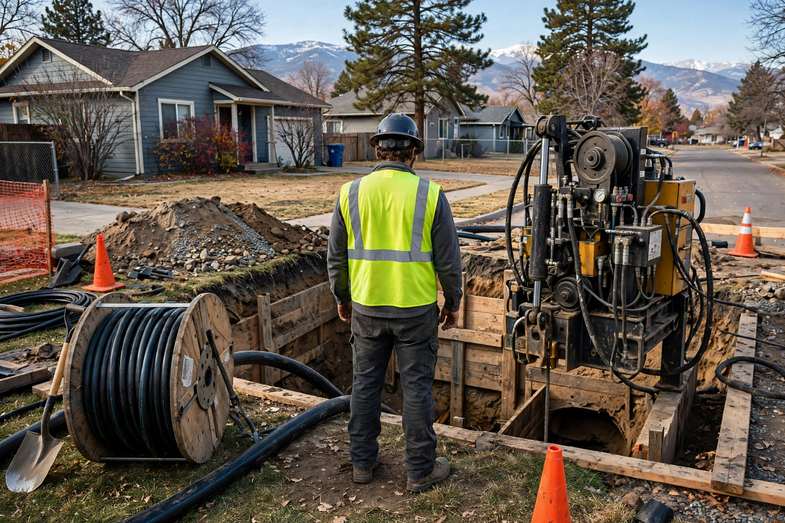
Trenchless sewer repair in Denver is the repair or replacement of a sewer lateral with minimal excavation. Pipe bursting pulls a new pipe through the old run, breaking the old pipe outward as the new one follows. Cured-in-place lining, known as CIPP, inserts a resin-saturated sleeve into the old pipe and cures it in place, forming a new pipe inside the old one. The method preserves the surface above the line, which matters in Denver, where laterals run under driveways, patios, and mature trees. It is not suitable for every line: collapsed pipe, severe offsets, and bellies are not candidates, and the camera inspection is the honest gate.
! Signs trenchless repair may fit
A clay lateral failing at several joints, under a driveway
When the failures are spread along the run and the line sits under concrete, trenchless is often the least disruptive path. The camera shows whether the line is a candidate or whether open excavation is the honest answer.
Root intrusion that returns after every clearing
Roots that grow back through the same joints after every clearing mean the joints themselves have failed. Lining seals the joints; bursting replaces the pipe. Either way, the roots lose their way in.
A line that needs replacing but the yard cannot be trenched
A mature landscape, a new patio, or a driveway over the lateral makes open excavation expensive in restoration alone. Trenchless work needs two access pits, not a continuous trench.
Scope of work
What our trenchless sewer repair includes
Every trenchless job starts with a camera inspection, because eligibility is decided by the pipe, not by preference. Here is the order of work.
-
01
Camera inspection and eligibility check
We run a pipe camera through the line and record the full run. Collapsed pipe, severe offsets, and bellies are not candidates for trenchless work, and the footage is what shows that before any work is quoted.
-
02
Method selection: bursting or lining
Pipe bursting pulls new pipe through the old run and is the choice when the old pipe is too far gone to line. Lining cures a resin sleeve inside the old pipe and is the choice when the old pipe still holds its shape. We lay out both with the trade-offs.
-
03
Two access pits, not a trench
We dig an entry pit and an exit pit, then pull or cure the new pipe through the old run. Driveways, patios, and mature trees above the line stay in place.
-
04
Camera check, permit, and backfill
After the work we re-camera the line to confirm the new pipe, pull the Sewer Use and Drainage Permit, and schedule the inspection before backfill. The pits are backfilled and the surface restored.
Why Denver homeowners choose trenchless
The surface above a Denver lateral is often worth more than the pipe below it. A driveway, a patio, or a mature tree that took forty years to grow cannot be restored in a day, and open excavation across a front yard is a project in itself. Trenchless work keeps the surface intact, which is why it is the first option we price when the camera says the line qualifies.
Book a trenchless repair visitTools and methods we use for trenchless repair
Pipe camera inspection
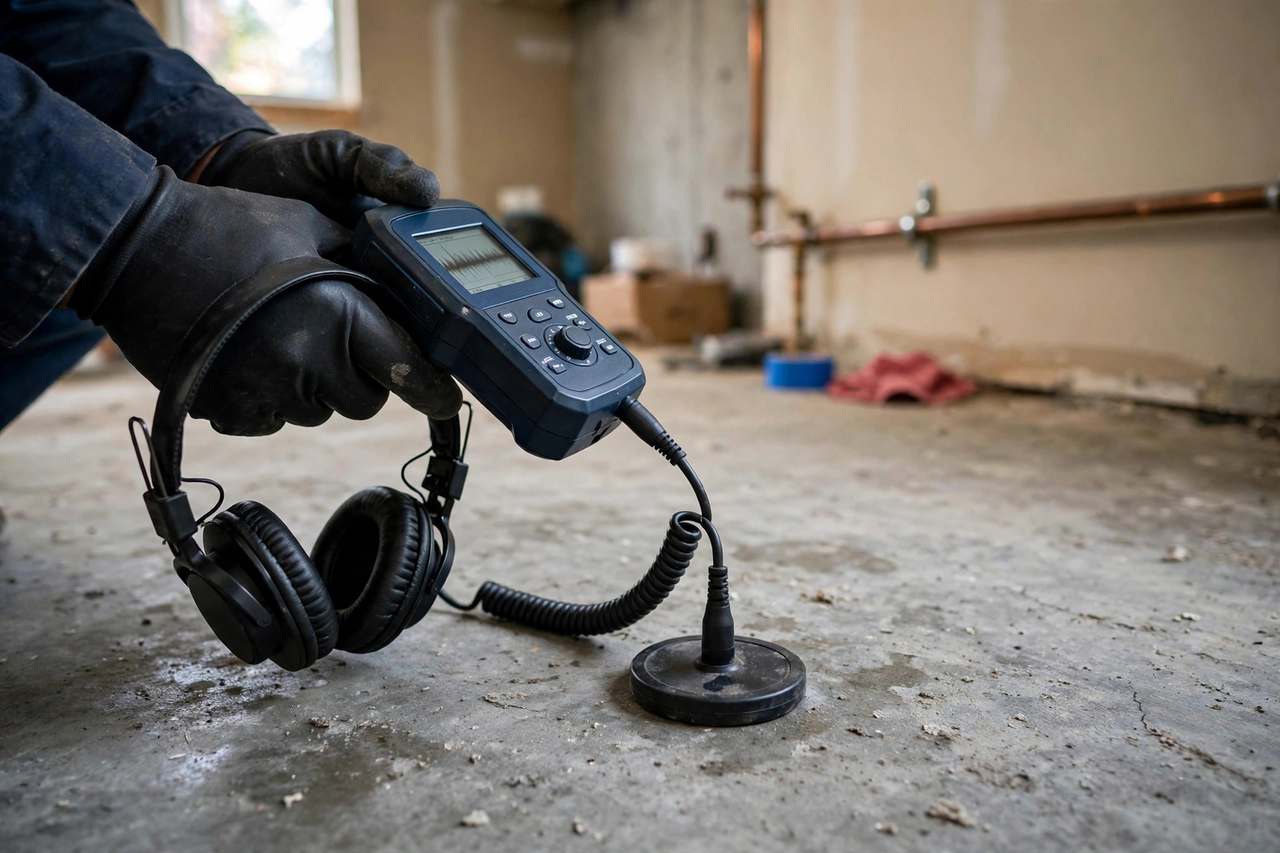
Feeds a camera through the sewer line to locate breaks, roots, and blockages, and to decide whether the line qualifies for trenchless work. The camera is the gate, not an afterthought.
Pipe bursting equipment
Pulls new pipe through the old run, breaking the old pipe outward as the new one follows. Used when the old pipe is too far gone to line.
Cured-in-place lining
Inserts a resin-saturated sleeve into the old pipe and cures it in place, forming a new pipe inside the old one. Used when the old pipe still holds its shape.
Hydro jetting machine
Clears the line before lining or bursting, so the new pipe or liner seats properly. A line that is not clean is a line the liner cannot bond to.
Local execution
Denver's laterals are the reason trenchless work matters here. In Park Hill, the laterals run longer under deep front yards with mature trees, so a replacement by open trench is a long dig through roots and landscaping. In Congress Park and Washington Park, the parkway trees sit directly over century-old jointed clay laterals, and the roots that block the line are the same trees the homeowner wants to keep. In Capitol Hill and Baker, the laterals run under tight 25-foot lots with alley access, so two small pits fit where a continuous trench does not. In the mid-century southwest, Harvey Park and Mar Lee, the clay laterals laid in the 1950s are failing together, and the choice between bursting and lining is made on the camera footage, not on preference. The city itself rehabilitates its own mains with cured-in-place lining, which is the same method, at a larger scale.
How trenchless sewer repair runs in Denver
What trenchless repair usually looks like
Trenchless is a method, not a promise
Call (720) 599-7253 to book a camera inspection
Trenchless repair is the right answer when the camera says the line qualifies, and the wrong answer when it does not. Call (720) 599-7253 to book a camera inspection, and we will confirm availability when you call. We run the camera, show you the footage, and lay out the trenchless and open options with the trade-offs, so the decision is made on what the pipe actually looks like.
How our trenchless repair process works
Call and camera inspection
You call (720) 599-7253. We run a pipe camera through the cleanout and record the full line to the city main. You watch the monitor with us, and we mark the depth and position of the failures.
Eligibility and method
We decide from the footage whether the line qualifies for trenchless work, and whether bursting or lining fits. Collapsed pipe, severe offsets, and bellies are not candidates, and we say so plainly when the footage shows them.
Pits, pull, and test
We dig two access pits, pull or cure the new pipe, re-camera the line to confirm it, and schedule the inspection before backfill. The pits are backfilled and the surface restored.
What affects the cost of trenchless sewer repair in Denver
We quote the work before we start, from the camera footage. The factors below are what move the number, and the open-excavation alternative is always priced alongside it.
Method: bursting versus lining
Pipe bursting and lining cost differently in equipment and labor, and the choice is made on the condition of the old pipe. Bursting replaces the pipe; lining forms a new pipe inside the old one. The camera decides which fits.
Length and depth of the lateral
A longer lateral needs more liner or more new pipe, and a deeper line needs deeper pits. Both add time and material, and both are priced from the footage marks.
Surface above the line
Trenchless work saves on surface restoration, which is the point. A line under a driveway, patio, or mature landscaping saves more than a line under a lawn, and that saving is part of the comparison against open excavation.
How to reach us
Trenchless sewer repair questions, answered
How much does trenchless sewer repair cost in Denver?
The cost depends on the method, the length and depth of the lateral, and what sits above the line. Published guide ranges for trenchless work vary widely by the foot, so we quote your line specifically, after a camera inspection, rather than quoting a range.
What is the difference between pipe bursting and lining?
Pipe bursting pulls a new pipe through the old run, breaking the old pipe outward as the new one follows. Lining inserts a resin sleeve into the old pipe and cures it in place, forming a new pipe inside the old one. Bursting is the choice when the old pipe is too far gone to line; lining is the choice when the old pipe still holds its shape.
When is trenchless sewer repair not possible in Denver?
Trenchless work is not suitable for collapsed pipe, severe offsets, or bellies where the pipe has settled and holds waste. The camera inspection is the step that shows those conditions before any work is quoted, and open excavation is the fallback when they appear.
Do I need a permit for trenchless sewer repair in Denver?
Yes — main-line sewer work in Denver needs a Sewer Use and Drainage Permit before it begins, and the finished work must pass inspection. We pull the permit and book the inspection before backfill.
More on sewer repair costs: Sewer line repair cost in Denver: what homeowners should expect.
Related services
Sewer Camera Inspection
Trenchless work starts with a scope. The camera decides whether the line qualifies, and the footage marks are what the quote is built on.
Sewer Line Replacement
When the line does not qualify for trenchless work, full replacement by open excavation is the fallback. We price both and lay out the trade-offs.
Sewer Line Repair
When the damage is localized to one joint or section, a spot repair is the smaller job. Trenchless work is for lines failing along the run.
Line failing under the driveway? Call (720) 599-7253
Trenchless or open-cut is a camera decision, not a guess: call (720) 599-7253 to book the inspection, and we will show you the footage and quote both options before any digging starts.