
Plumber in Washington Park, Denver, CO
Washington Park is mostly brick built from 1900 to 1940 — bungalows, Denver Squares, Tudors, and Victorians around the 165-acre park — with a 1920s boom that built the largest number of houses in the neighborhood's history. Its documented pattern is the patchwork partial replacement: a new copper service to the property line, original galvanized pipe still inside, and low pressure that survives the so-called new line. Call (720) 599-7253 to discuss your job. A Plumber in Washington Park, Denver, CO therefore cameras the clay laterals joint by joint: the short sections fail one joint at a time, not all at once.
About this area
The patchwork service line
Why Washington Park is different
The angle here is the half-replaced service. Many Washington Park homes had their service replaced only partway — new copper to the property line, original galvanized inside — so low pressure persists after a new service line, and the fix is completing the run end to end, main to house. The 1950s and 1960s partial replacements in cast iron and early copper, often only to the property line, are part of the same pattern.
Plumbing in Washington Park, Denver, CO
Washington Park's city-defined borders are Downing Street, Cherry Creek and I-25, University Boulevard, and Louisiana Avenue at the park, with the 165-acre park dividing East from West. The housing is mostly brick from 1900 to 1940, with many 1940s and 1950s wood-frame homes later scraped for modern mansions. The era-typical pipes are 1900 to 1940 galvanized, cast iron, and vitrified-clay laterals in short bell-and-spigot sections, with lead-era goosenecks on some of the oldest connections.
Services available
Plumbing services Washington Park homeowners call us for
Shaped by a 165-acre park dividing East from West, with 1900-1940 brick homes on short-section vitrified-clay laterals, the Washington Park call list is short — main water line replacement, repiping and leak detection above the rest. Call (720) 599-7253 to discuss your job.
Services in Washington Park
Main Water Line Replacement
Completes a half-replaced service end to end, main to house, where a partial replacement left original galvanized inside.
Repiping
Replaces the original galvanized runs that a partial service replacement never touched.
Leak Detection
Finds hidden leaks in galvanized supply run through brick walls and in clay laterals laid in short bell-and-spigot sections.
Sewer Camera Inspection
Shows the condition of a vitrified-clay lateral before any clearing or digging — short sections mean many joints.
Water Heater Repair
Diagnoses water heaters in brick homes from 1900 to 1940, where sediment and age show up first.
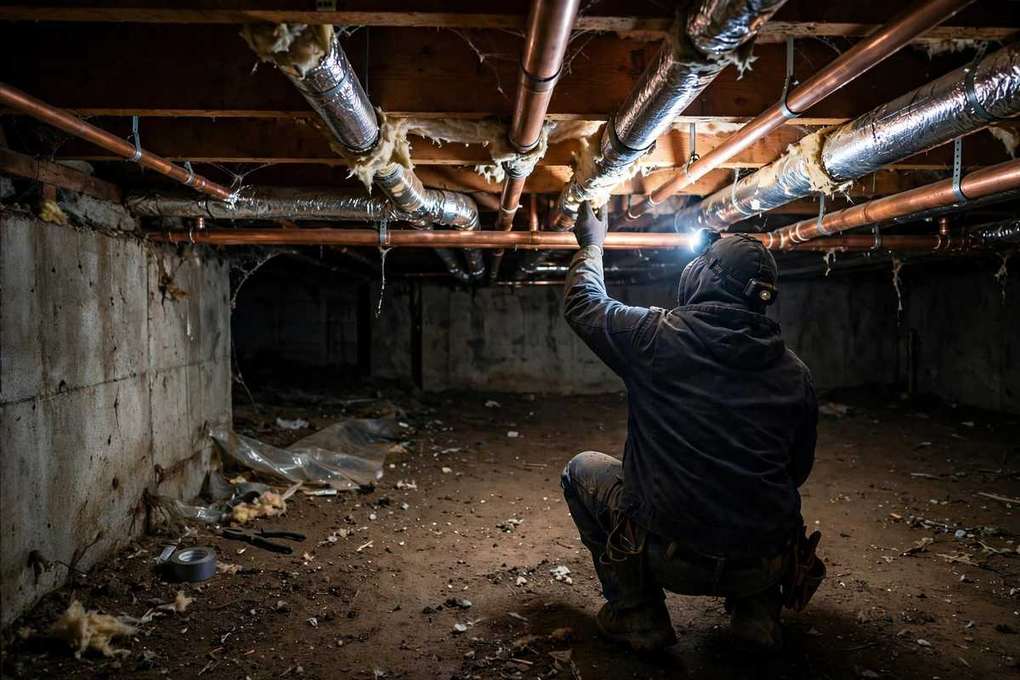
How we work locally
How we run plumbing calls in Washington Park
Challenge: A new service line that did not fix the pressure
When a service is replaced only to the property line, the original galvanized pipe inside the house is still narrowing — so low pressure survives the new line and the homeowner thinks the replacement failed.
Challenge: Clay laterals in short bell-and-spigot sections
Washington Park's vitrified-clay laterals were laid in short sections, which means many joints — and many entry points for roots under the neighborhood's mature trees.
Where we work
We work across Denver's neighborhoods from our shop at 567 S Eliot St in Athmar Park. The neighborhoods above sit beside Washington Park — see their pages for the pipe profile on each street, because a 165-acre park dividing East from West, with 1900-1940 brick homes on short-section vitrified-clay laterals.
How we diagnose a Washington Park problem
Test pressure on both sides of the property line.
A partial replacement hides the remaining original pipe. Testing both sides shows whether the low pressure is outside or inside — and the fix follows the result.
Camera the lateral joint by joint.
Short bell-and-spigot sections mean many joints. We camera the whole run so every failed joint is found, not just the first.
Check the service at the street for the oldest Washington Park connections.
Lead-era goosenecks appear on some of the oldest connections. Denver Water's Lead Reduction Program map shows whether a line is in the program for replacement at no direct cost.
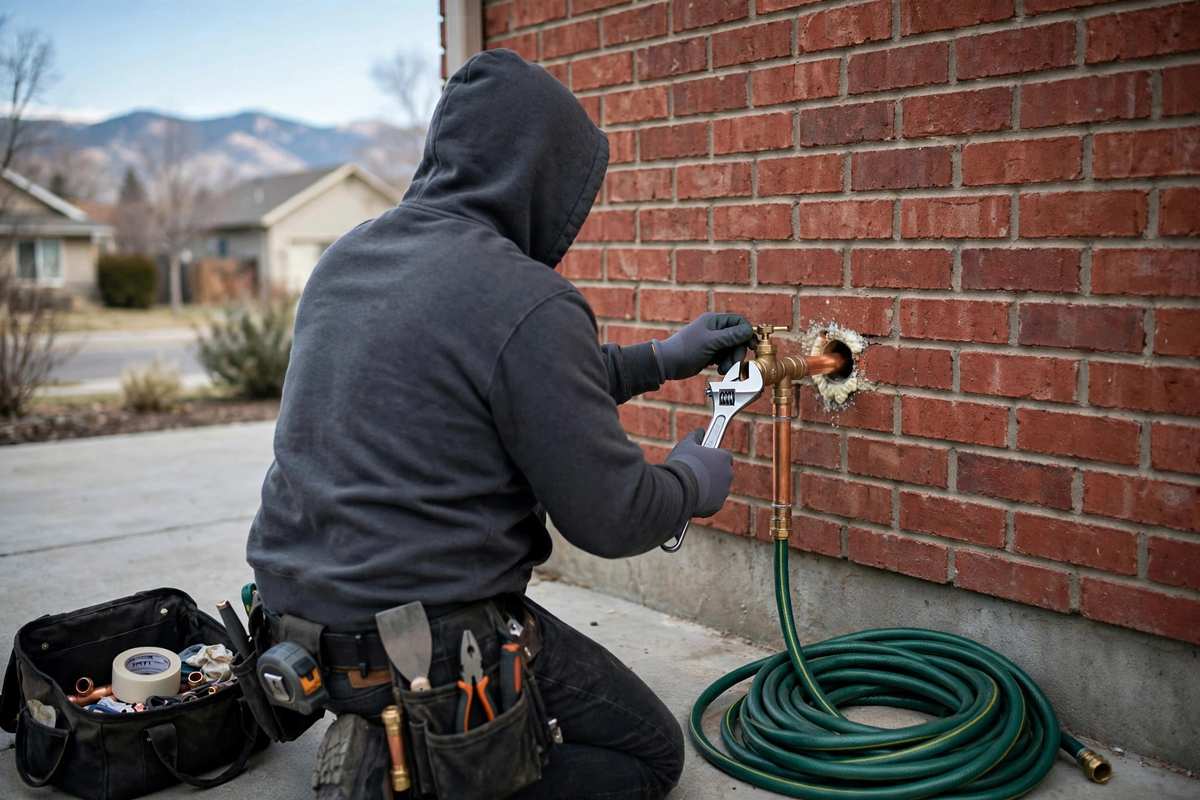
A Denver plumbing company
Working on Washington Park's 1900–1940 homes
5280 Denver Plumbing Solutions LLC works from 567 S Eliot St, Denver, CO 80219, in Athmar Park — a short drive from Washington Park. The BBB lists A+ (not BBB accredited), no complaints filed in the last three years, and a start date of July 22, 2022. Washington Park is served from that shop.
Local questions
I already had a new water service line. Why is the pressure still low?
In Washington Park the service was often replaced only to the property line, leaving original galvanized pipe inside the house. Low pressure persists until the run is completed end to end, main to house.
Why does my drain back up when the park trees are so far from my house?
The clay laterals here were laid in short bell-and-spigot sections with many joints, and roots travel along the run. A camera inspection shows which joints have failed, even some distance from the tree.
Could my Washington Park home still have a lead service line?
It is possible — lead-era goosenecks appear on some of the oldest connections. Check Denver Water's Lead Reduction Program map first; lines in the program are replaced at no direct cost.
How do I reach 5280 Denver Plumbing from Washington Park?
Ring (720) 599-7253 and we will confirm availability and the scope of the job. The shop is at 567 S Eliot St in Athmar Park, Denver, CO 80219, and Washington Park is served from there, where a 165-acre park dividing East from West, with 1900-1940 brick homes on short-section vitrified-clay laterals.
About the company
5280 Denver Plumbing, serving Washington Park
5280 Denver Plumbing, based at 567 S Eliot St in Athmar Park, Denver, CO 80219, serves Washington Park from that shop. Per the BBB: A+ rated, not BBB accredited, no complaints filed in the last three years, in business since July 22, 2022. In Washington Park, a 165-acre park dividing East from West, with 1900-1940 brick homes on short-section vitrified-clay laterals.
Areas we cover
Signs you need a plumber in Washington Park
Some Washington Park problems shout — water on the floor, no hot water at all. Others creep in for months, and the one to watch here is a clay lateral failing joint by joint in short sections, letting roots in at every joint. These are the signs that usually mean it is time to call.
Low pressure after a service replacement
If a new service line did not fix the pressure, the original galvanized pipe inside the house is still in place. Test both sides of the property line.
Weak water pressure at every fixture
The 1900-1940 brick homes in Washington Park lose pressure as one: galvanized supply narrowing from the inside shows up at every tap at once. A lone weak tap is a fixture; the house-wide version is the supply, and the fix starts with a pressure test, not a part swap.
Recurring backups after a clearing
Short clay sections mean many joints for roots to enter. A returning backup needs a camera, not another clearing.
Water that turns brown after sitting
Rust-colored water in a 1900-1940 brick homes home in Washington Park usually means galvanized supply corroding from the inside — worst from the hot taps, where the water has sat in the tank and the lines. It clears after running, then comes back, because the corrosion is in the pipe, not the water.
Gurgling at the lowest fixture when laundry runs
Gurgling at the lowest fixture often means the main line or lateral is partly blocked — in Washington Park, usually roots at a clay joint.
Common plumbing problems in Washington Park
Washington Park's plumbing profile comes from a 165-acre park dividing East from West, with 1900-1940 brick homes on short-section vitrified-clay laterals. The problems that come up most often here follow from that, and they are the ones below. Call (720) 599-7253 to discuss your job.
Half-replaced services leaving original galvanized inside
Why it happens here: A new copper service to the property line leaves the original galvanized pipe inside the house, so low pressure persists after the replacement.
Our approach: We test both sides of the property line, then complete the run end to end, main to house.
Clay laterals in short sections with many joints
Why it happens here: Vitrified-clay laterals laid in short bell-and-spigot sections have many joints, and each one is an entry point for roots.
Our approach: We camera the whole lateral joint by joint, clear the roots, and replace the failed sections so the entry points are closed.
Galvanized supply losing pressure across the house
Why it happens here: The pipe looks sound from the outside and is closing up inside: 1900-1940 brick homes galvanized narrows until every fixture in a Washington Park home runs weak. That is why the diagnosis here is a pressure test, not a look at the tap.
Our approach: We pressure-test the supply on both sides of the property line, then replace the failed runs — a partial repipe where the damage is local, a full repipe where the whole 1900-to-1940 supply is closing.
What shapes the scope of a Washington Park job
Washington Park jobs follow the patchwork replacement history. These are the factors that shape the scope: We do not publish prices on this site — every job is scoped from the house itself, and the scope is discussed with you before work starts.
No prices published: Call (720) 599-7253 to discuss your Washington Park job. No prices are published, because a 165-acre park dividing East from West, with 1900-1940 brick homes on short-section vitrified-clay laterals — the scope depends on the house, not the symptom. We will confirm availability and talk through the scope when you call.
Pipe age and material
1900 to 1940 galvanized, cast iron, and clay is the norm, with 1950s and 1960s partial replacements mixed in — often only to the property line.
Access
Full basements make most Washington Park work reachable from below, but brick walls and scraped-and-rebuilt lots change how a repipe is routed.
Excavation
A service or lateral replacement under a front yard or driveway involves digging and restoration; completing a half-replaced service may mean digging on both sides of the property line.
Permits
Some Washington Park jobs need a City of Denver permit before work starts — a lateral replacement on a short-section clay line, or a water service on a 1900-1940 brick home is the usual trigger here. It is permitted first, and the inspection is part of the job.
How seasons affect plumbing in Washington Park
In Washington Park the year turns on winter freeze-thaw finds the oldest exposed runs, and spring root growth tests the short clay joints. The tips below are general seasonal care for this neighborhood's housing and ground — not a service promise.
Spring
In Washington Park the spring check is a camera inspection: roots wake up in the clay laterals as the trees leaf out, and finding the entry early beats a backup. The stock is 1900-1940 brick homes on 1900-1940 galvanized, cast iron and vitrified-clay laterals in short bell-and-spigot sections.
Summer
Water heaters work harder and garden irrigation adds load to outdoor shut-offs. Check hose bibs for drips that soak the brick foundations.
Fall
Insulate exposed pipe in crawlspaces and basements, disconnect garden hoses, and have an older water heater looked at before winter. In Washington Park, fall prep also means checking the half-replaced services before winter demand.
Winter
Freeze risk in Washington Park starts with the exposed runs, because winter freeze-thaw finds the oldest exposed runs, and spring root growth tests the short clay joints. Cabinet doors open under sinks on exterior walls, and a known main shut-off, are the two things to sort before a pipe freezes.
Questions to ask before hiring a plumber in Washington Park
Not every plumber who answers the phone in Denver knows Washington Park's housing stock — a 165-acre park dividing East from West, with 1900-1940 brick homes on short-section vitrified-clay laterals. Before you let someone work on your home, ask a few questions. The answers will tell you whether the diagnosis fits the house.
Will you test pressure on both sides of the property line?
Why it matters: A partial replacement hides the remaining original pipe. The test should cover both sides before a fix is quoted.
Will you camera the whole lateral, not just the first joint?
Why it matters: Short clay sections mean many joints. The camera should cover the full run, so every failed joint is found.
How will you check whether my service line is lead, given the patchwork replacements?
Why it matters: Lead-era goosenecks appear on the oldest connections. The service should be checked at the street, and the Lead Reduction Program map consulted, before any replacement is quoted.
Will you pull a City of Denver permit for my Washington Park job when it needs one?
Why it matters: In Washington Park the permit question comes up on water heater replacements, sewer work and repipes, most often a lateral replacement on a short-section clay line, or a water service on a 1900-1940 brick home. Permit-required work should be permitted before it starts.
What is included in the written scope for a Washington Park job?
Why it matters: The scope for your Washington Park home should list the work, the materials, and what happens to the excavation afterward — in writing, before work begins. Here the excavation is a lateral replacement on a short-section clay line, or a water service on a 1900-1940 brick home, so the backfill and surface matter as much as the pipe.
Getting around Washington Park
Washington Park runs roughly from Downing Street in the west to University Boulevard in the east, with Cherry Creek and I-25 to the south and Louisiana Avenue at the park in the north. The 165-acre park divides the neighborhood into East and West, tracked separately since 1972.
Washington Park
The 165-acre park at the neighborhood's center, dividing East from West, with brick homes from 1900 to 1940 around it.
Downing Street
To the west, toward Platt Park and Baker — the far edge of the Washington Park grid.
Louisiana Avenue
The northern edge of the park and the neighborhood's north line at the park.
Nearby neighborhoods we serve from Washington Park
Denver's neighborhoods run together around Washington Park, but the pipe profiles do not: the areas below each have their own page, and Washington Park's turns on a 165-acre park dividing East from West, with 1900-1940 brick homes on short-section vitrified-clay laterals.
Plumbing coverage in Washington Park & Denver
From our shop at 567 S Eliot St in Athmar Park, Denver, CO 80219, we serve Denver neighborhoods including Washington Park. The full list is on our locations page; call (720) 599-7253 to discuss your job — in Washington Park, a 165-acre park dividing East from West, with 1900-1940 brick homes on short-section vitrified-clay laterals.
See all Denver neighborhoodsNeed plumbing in Washington Park, Denver, CO?
If your Washington Park home still has low pressure after a service replacement, or a drain that keeps backing up, call (720) 599-7253 and tell us what was already replaced — we will confirm availability and the next step when you call.
Call now