Main water line replacement in Denver, lead check first
Before you pay anyone to replace a water service line in Denver, check Denver Water's Lead Reduction Program map first. If your line is lead, Denver Water replaces it at no direct cost to you, and a plumber is not the right call. If your line is not lead and it is leaking, corroded, or choking your pressure, replacement is our job. Call (720) 599-7253 to book a visit.
Service overview
What main water line replacement in Denver involves
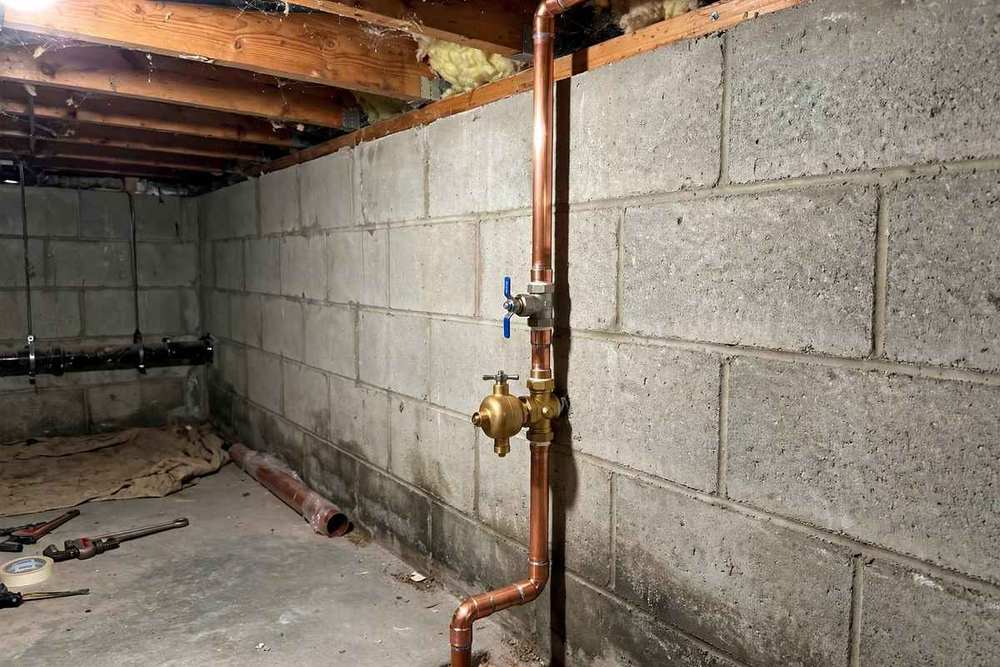
The main water line, also called the service line, is the pipe from the water main in the street to the plumbing in your home, and in Denver it is customer-owned: you own it from the tap at the main all the way into the house. A main water line replacement in Denver means digging or boring a new line from the main to the house, connecting it at the meter, and restoring the surface. There are two kinds of replacement, and they go to different places. A lead service line is replaced by Denver Water under its Lead Reduction Program at no direct cost to the customer. A non-lead line that leaks, has corroded shut, or has frozen and split is replaced by a plumber. The first step is always to find out which kind of line you have.
! Signs your water service line needs attention
Water pressure dropping across the whole house
When every fixture loses pressure at once, the restriction is usually in the service line, not the fixtures. Galvanized service lines close from the inside with rust and scale, and the flow drops a little more every year.
A wet patch in the yard between the street and the house
A wet patch along the service path, or a section of lawn that stays green when the rest dries out, usually means the service line is leaking underground. The leak is yours to repair, because the line is customer-owned.
Brown water, or a line you know is lead
Homes built before 1951 are the most likely to have lead service lines in Denver Water's experience. If your line is lead, do not pay a plumber to replace it: check Denver Water's Lead Reduction Program map first, because Denver Water replaces lead lines at no direct cost.
Scope of work
What our main water line replacement includes
Every water line job starts with the lead check, because the answer changes who does the work. Here is the order of work when the line is ours to replace.
-
01
Lead check first
Before any digging, we confirm the line material. If the line is lead, we direct you to Denver Water's Lead Reduction Program, which replaces customer-owned lead service lines at no direct cost, with free filters until six months after replacement. We do not quote a lead replacement that Denver Water will do for free. Program status is as of November 2026; check Denver Water's pages for the current position.
-
02
Locate and expose the line
We locate the service line from the main to the house, mark the path, and expose the connection points. You own the line from the tap at the main into the home, and the replacement covers that full run.
-
03
New line, meter connection, and test
We install the new line, connect it at the meter, and pressure-test the run before backfill. The new line is sized to the home, and the connection is made to code.
-
04
Backfill, restoration, and records
We backfill in compacted lifts, restore the surface, and leave you a record of the new line material and route, so the next owner and the next plumber know what is in the ground.
Why the lead check comes first
As of November 2026, Denver Water's Lead Reduction Program, launched in January 2020, is a 15-year program to replace every customer-owned lead service line in its service area with copper, at no direct cost to the customer. More than 35,000 lines have been replaced since 2020. Homes built before 1951 are the most likely to have lead lines. A homeowner who pays a plumber to replace a lead line has paid for work Denver Water would have done at no direct cost, which is why the check comes before the quote, every time. Program status and eligibility should be checked with Denver Water, as they can change.
Book a water line visitTools and methods we use for water line replacement
Line locating equipment
Marks the path of the service line from the main to the house, so the replacement digs in one place and the new line follows the right route.
Pipe camera inspection
Lets us see inside the line where access allows, to confirm corrosion, scale, or a leak before we dig. The camera is how we separate a failing line from a failing fixture.
Excavation and boring equipment
Opens the trench or bores the new line in, depending on access, depth, and what sits above the path. A line under a driveway or mature landscaping is bored, not trenched, where the ground allows.
Pressure test gauge kit
Pressurizes the new line before backfill and holds it while we watch the gauge. A new line that is not tested is a new line that can fail the same week it is buried.
Local execution
Denver's service lines tell the city's history in pipe. In Capitol Hill, Baker, and Five Points, the pre-1900 homes commonly had half-inch lead services, and the pre-1951 stock is the cohort Denver Water flags as most likely to have lead lines. In Park Hill and Washington Park, the 1893 to 1941 homes sit on galvanized services that have been closing from the inside for decades. In the 1950s southwest, Harvey Park and Mar Lee, the services are galvanized and early copper, and the failures are leaks at the joints and corrosion that chokes pressure. In Central Park and Green Valley Ranch, the stock is new enough that the services are copper or PEX and replacement is rarely the job. Denver Water's supply is soft to moderately hard, with annual-report averages in the range of about 89 to 105 mg/L, so scale contributes to the narrowing, but the age of the pipe is the main story. The program replaces the service line only: interior galvanized pipe is not touched, and that distinction matters when a home has both a lead service and old interior pipe.
How main water line replacement runs in Denver
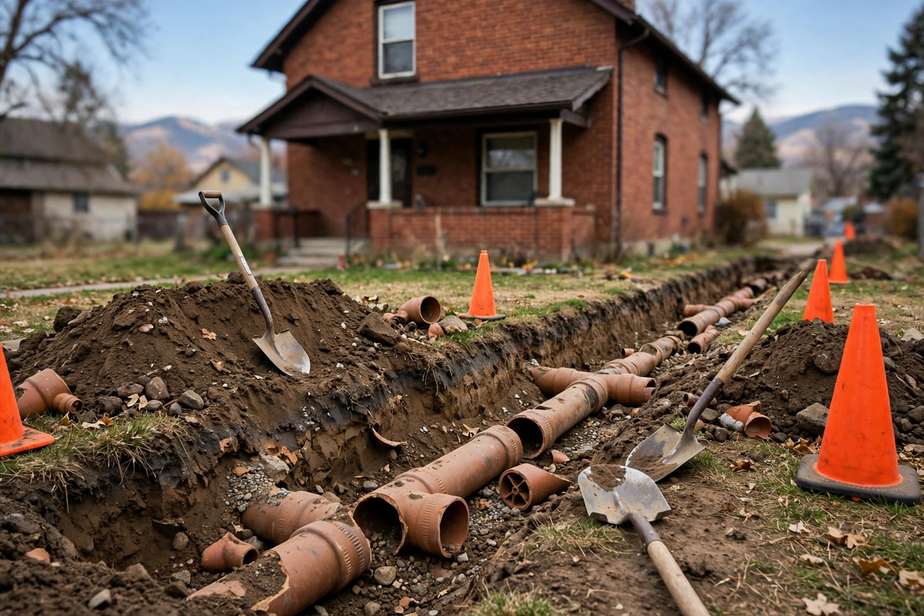
What water line work usually looks like
Check the Denver Water map before you pay for a replacement
Call (720) 599-7253 to book a water line visit
If you are thinking about replacing your water service line, check your address on Denver Water's Lead Reduction Program map first — program status is as of November 2026, so confirm the current position with Denver Water. If your line is lead, Denver Water replaces it at no direct cost to you, with free filters until six months after replacement, and a plumber is not the right call. If the map shows your line is not lead, or you already know it is not, call (720) 599-7253 to book a visit, and we will confirm availability when you call. We locate the line, confirm the material, and quote the replacement before any digging starts.
How our water line replacement works
Call and the lead check
You call (720) 599-7253. We ask the age of the home and whether you have checked Denver Water's Lead Reduction Program map. If the line is lead, we direct you to Denver Water. If it is not, we book the visit.
Locate and confirm
We locate the service line from the main to the house, confirm the material, and mark the path. The replacement is quoted from the length, depth, and access, not from a guess.
Replace, test, and restore
We install the new line, connect it at the meter, pressure-test before backfill, and restore the surface. You get a record of the new line material and route.
What affects the cost of main water line replacement in Denver
We quote the replacement before any digging starts, from the length, depth, and access of the line. The lead check starts with a phone call, not a visit: if the line is lead, Denver Water replaces it at no direct cost, and there is no quote from us at all.
Length and depth of the run
A short run at shallow depth is the simplest replacement. A long run from the street, or a deep line, needs more excavation, more material, and more backfill.
Trench versus bore
A line under a lawn is trenched. A line under a driveway, patio, or mature landscaping is bored where the ground allows, which costs more in equipment but saves the surface above it.
What sits above the path
Cutting and replacing concrete, restoring sod, or working around tight alley access adds cost. A clear path from the street to the house is the simplest job.
How to reach us
Main water line questions Denver homeowners ask
How much does main water line replacement cost in Denver?
The cost depends on the length and depth of the run, whether the line is trenched or bored, and what sits above the path. But the first question is not cost: it is whether the line is lead. If it is, Denver Water replaces it at no direct cost to you, and there is no plumber's quote at all. We quote non-lead replacements only, after locating the line.
Does Denver Water replace lead service lines for free?
As of November 2026, Denver Water's Lead Reduction Program replaces customer-owned lead service lines at no direct cost to the customer, with free filters until six months after replacement. The program launched in January 2020 and has replaced more than 35,000 lines since then. Check your address on Denver Water's Lead Reduction Program map to see whether your home is in the program. Program status and eligibility should be checked with Denver Water, as they can change.
How do I know if my Denver home has a lead service line?
Homes built before 1951 are the most likely to have lead service lines in Denver Water's experience. The reliable step is to check your address on Denver Water's Lead Reduction Program map, or to have the line material confirmed on site. Never assume a home has, or does not have, a lead line without that check.
Who owns the water service line in Denver?
The homeowner owns the service line from the tap at the main all the way into the home. That is why a leaking or corroded non-lead line is the homeowner's repair, and why a lead line is replaced by Denver Water under its program rather than by the homeowner's plumber.
Further reading: What Denver homeowners should know before hiring a plumber.
Related services
Leak Detection
A wet patch in the yard can be a service line leak or a supply leak inside the house. Leak detection separates the two before any digging starts.
Whole House Repiping
A lead service line and old interior pipe are two different problems. Denver Water replaces the service line; repiping replaces the galvanized pipe inside the home.
Frozen Pipe Repair
A service line that has frozen and split is a replacement, not a patch. We replace the run and talk through depth and insulation for the next cold snap.
Check the map first, then call (720) 599-7253
Check your address on Denver Water's Lead Reduction Program map first. If your line is not lead, call (720) 599-7253 to book a visit, and we will confirm availability when you call.