
Low water pressure has different causes depending on whether it affects one fixture or the whole house, and whether it came on suddenly or slowly over years. In Denver, the slow version is often the house itself: galvanized pipe closing from the inside in a pre-1970 home, or a service line at the end of its life.
One fixture or every fixture?
Start with the aerator
Check first. If one tap is weak, clean the aerator: Denver's soft to moderately hard water leaves scale, and a clogged aerator is the most common single-fixture cause. If every fixture is weak, the problem is upstream: the main shutoff, the pressure regulator, the service line, or the supply pipe inside the house.
Galvanized supply pipe
Galvanized steel supply pipe corrodes from the inside, narrowing the bore until pressure falls at every fixture. This is the signature problem of Denver's pre-1970 stock, and it affects 55.5% of the city's housing, built before 1980. The fix is a whole-house repipe in PEX or copper, not a fixture swap. If pressure is low everywhere and the house is pre-1970, a repipe is the conversation to have.
Service line and lead
Pre-1951 homes: check the lead map first
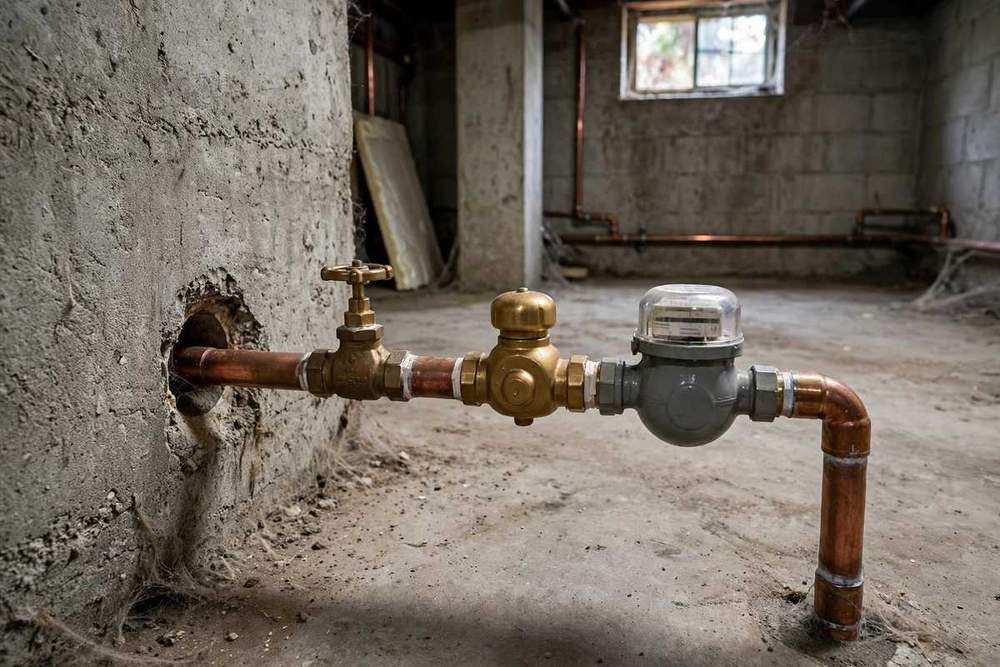
The service line from the street main to the house is the homeowner's responsibility, and Denver Water says the best approach for older homes with reduced flow is complete replacement of the tap, service and meter all the way from the main. If your home was built before 1951, check Denver Water's Lead Reduction Program pages first: the program replaces customer-owned lead service lines at no direct cost. See main water line replacement.
Pressure regulator and shutoff
A failing pressure-reducing valve can drop pressure house-wide, and so can a main shutoff that is not fully open or is itself corroded. Both are checked before any repipe is quoted. A pressure test at an outdoor hose bib tells a plumber whether the problem is the city's supply or the house's pipework.
When to call a plumber
Call if pressure is low at every fixture, if it dropped suddenly, if it is low only on hot water, which points to the water heater, or if the house has galvanized pipe and the problem is getting worse year by year. Call (720) 599-7253 and tell us the age of the house and which fixtures are affected. See also leak detection: a hidden leak can show up as low pressure with no visible water.